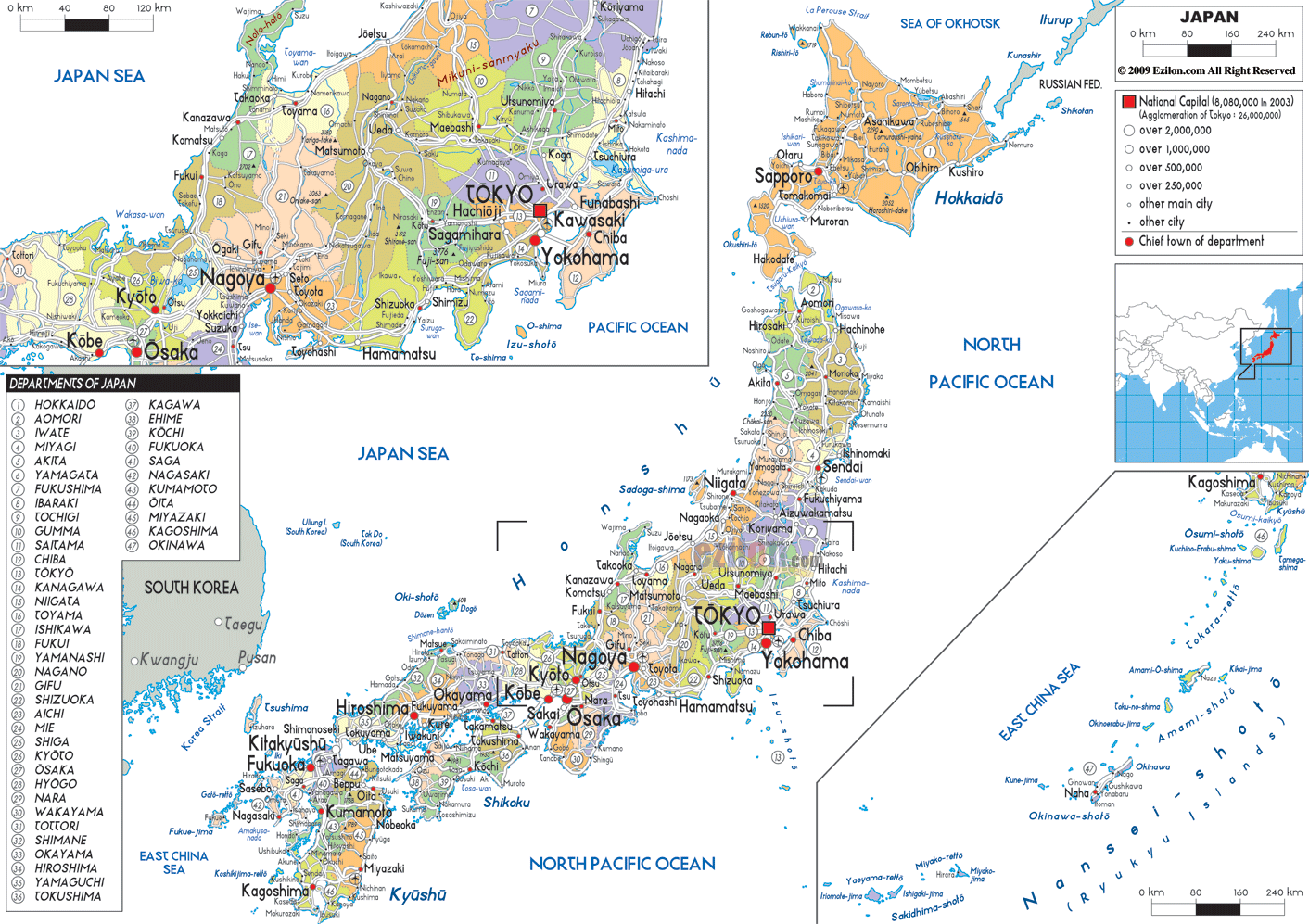
Description: Detailed large political map of Japan showing names of capital city, towns, states, provinces and boundaries with neighbouring countries.
 Situated
in the Far East the archipelago of Japan is separated
from the Asian mainland by the sea and split in four
main islands: Honshu, Hokkaido, Kyushu and Shikoku. The
capital is Tokyo and the official language Japanese.
Situated
in the Far East the archipelago of Japan is separated
from the Asian mainland by the sea and split in four
main islands: Honshu, Hokkaido, Kyushu and Shikoku. The
capital is Tokyo and the official language Japanese.
Most of the country is covered with hills and mountains,
a few of which are still active or dormant volcanoes,
notably Mount Fuji the highest in the country rising to
3,776 m above sea level. The costal line is very long
and varied, with deeply indented bays and natural
harbors with the backdrop of mountains. Japan is
composed of thousands of islands of magnificent natural
beauty, with the lavender farms of the isle of Hokkaido
in the north and the subtropical beaches of Okinawa in
the south.

Physical Map of Japan
Physical map and map image of Japan.

Road Map of Japan
Road map and map image of Japan.

Regional Directory of United States of America
Information and guide about United States of America and websites with American topics.

Regional Directory of Europe
Information and guide about Europe and websites with European topics.

Regional Directory of Australia
Information and guide about Australia and websites with Australian topics.