

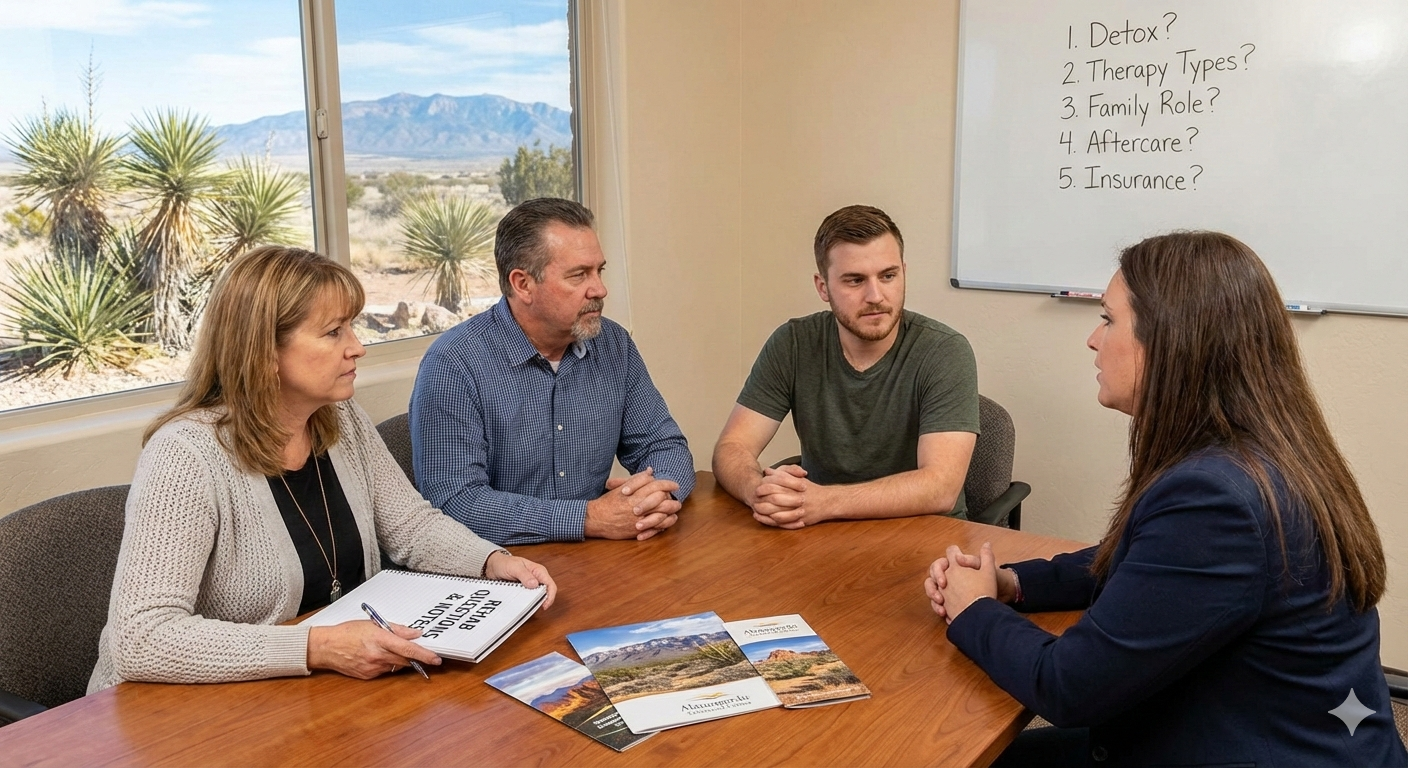
Choosing a path toward recovery is a monumental step for any family. This decision reflects a deep commitment to health and restoration. When a loved one struggles with substance use, the search for support often feels overwhelming due to a flood of complex information.
The local landscape offers various resources for those who seek a fresh start. Accessing an Alamogordo drug rehab center allows for a level of proximity that can facilitate family involvement. This article explores the vital inquiries every family should make to find a safe and effective environment. By asking the right questions, parents and siblings can move forward with confidence and clarity.
Program Structure And Early Care
A clear set of questions helps each household understand how a center operates and how that approach suits the needs of a loved one.
Helpful Details To Clarify
- Care paths available at the center
- Staff preparation and past work in this field
- Safety steps and emergency protocol
- Post-care support options
These points offer a solid base for deeper discussion with any center under review.
Credentials And Staff Background
Families in Alamogordo often ask about proper credentials, since this helps confirm trust in the care team. Each center should hold state approval for its care model. A staff group with varied skill sets often supports better outcomes. Households may ask about team size, educational background, and past work with cases similar to the one at hand.
Trust grows when the center explains how each expert contributes to day-to-day care. A talk with a counselor or director may help clarify how the center adjusts care for different substance types. A transparent outline of steps for each phase fosters confidence in the center’s approach.
Questions About Tailored Care Paths
A center with both structured and flexible options often helps households see a path that fits their loved one’s needs. The mix may include medical support, talk-based methods, group sessions, or skill-based focus areas that address root causes.
Alamogordo Households may ask how the center tailors each plan over time. This matters, as progress often shifts from week to week. A clear outline of typical stay length helps avoid confusion. A center with short, mid, and extended paths provides room for adjustment based on progress.
Family Involvement And Support Roles
Family presence boosts morale throughout recovery, so households often ask how they may offer support without disruptiveness. Many centers invite relatives to take part in select sessions or educational modules. These moments help relatives understand patterns, triggers, and helpful response styles.
Households may ask how often they may visit, who coordinates each visit, and how privacy rules protect all involved. A program with family engagement options may also offer periodic updates on progress. This helps reduce worry and keeps relatives involved at a healthy level.
Financial Points And Coverage Options
Costs vary, so early questions about coverage remove stress for families. Households may ask about accepted insurance providers, extra fees, payment plans, and any refund policy if the stay changes.
A transparent finance team can clarify typical cost ranges for each care path. Early clarity prevents unexpected burdens later. Some centers assist with paperwork for coverage requests. This can ease stress for families who manage complex documents during an already tense stage.
Steps For Continued Progress After Discharge
A strong start matters, yet progress after the stay is equally vital. Households often ask what follow-up paths look like. Many centers in Alamogordo offer alumni groups, periodic check-ins, or coordination with local counselors. A robust post-care setup helps prevent setbacks and supports long-term stability.
Families should ask how the center transitions each person from structured care to daily life and what tools support that shift. A plan for local support networks helps maintain momentum. A center that guides connections to community groups, peer support circles, or outpatient services strengthens the overall journey.
How To Approach Final Decisions On Care
A decision becomes easier after key questions are fully answered. Households in Alamogordo may speak with past clients to gather broader insight. A center that welcomes open discussion often demonstrates strong confidence in its approach. Clarity about values, rules, and support style should feel evident after early conversations.
As closure approaches, families can reflect on safety, staff quality, care range, and overall tone. A center that aligns with these priorities often provides the stability each person needs. Many families discover that a second conversation with a counselor helps finalize the decision and may even reveal new details worth considering.
A clear set of thoughtful questions helps families compare care options with confidence and purpose. Open conversation about daily routines, staff preparation, family involvement, and life after discharge gives families a fuller view of what lies ahead.
Many households discover that centers in the region, including an Alamogordo drug rehab, encourage questions that lead to stronger, more secure decisions. A steady, well-informed approach makes the path toward recovery feel more hopeful for everyone involved.
