

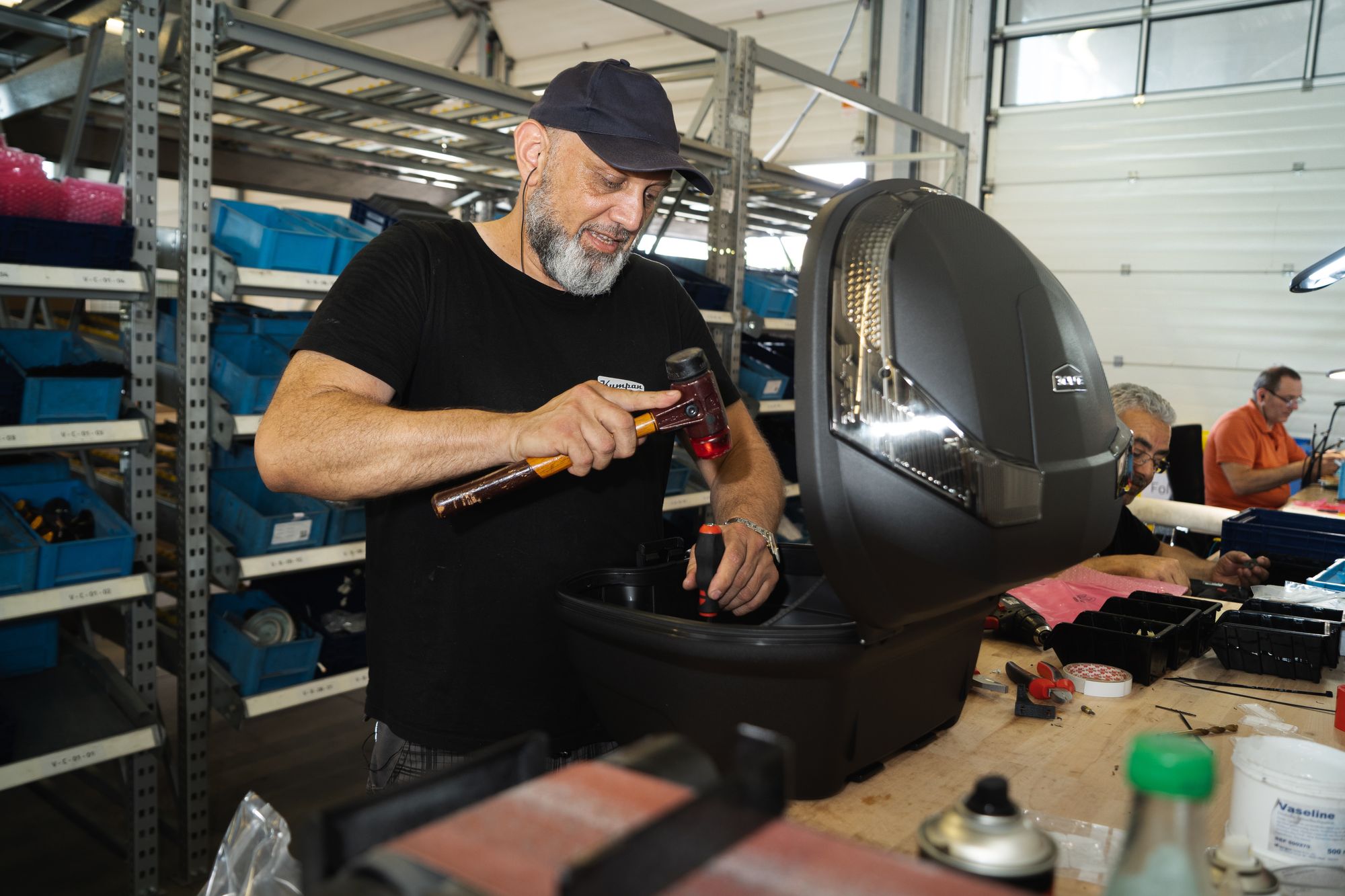
It is not a crazy dream to have a small, local manufacturing business in 2026. This is not just for large factories or industrial estates. Activities like micro-manufacturing are taking place in the shadows due to supply chain chaos, re-shoring, and customers’ desire for products made locally, more quickly, and with greater care. Now, a tight team in 2,000 sq. ft can beat an overseas supplier in speed, flexibility, and story.
This guide provides practical operational blueprints for planning, launching, and optimizing a small‑scale, locally focused production business. It is written for owners and founders, not engineers: simple language, actionable steps, and realistic examples.
Why Small‑Scale Manufacturing And Local Production Are Booming
The Macro Forces Behind Micro‑Factories
Several trends are converging to make local production attractive again:
-
Changes in trade and tariffs have made some imports costlier and more uncertain.
-
Brands are looking for reliable sources of supply as global events, such as the political climate, are disrupting supply chains.
-
Investment by the government and private sectors in U.S. manufacturing is generating fresh demand for local suppliers surrounding large plants.
-
An increasing number of consumers, particularly with higher incomes, prefer faster shipping and “made here,” sustainable products.
The result is a growing space for right-sized manufacturing – small production houses that focus on a limited product range, short runs, and niche markets.
Why This Is A Window For Small Businesses
Large manufacturers are built for scale, not for flexibility. They enjoy extended runs, standardized SKUs, and predictable amounts.
It creates opportunities for smaller players to do better.
-
Frequent design change or customization is needed for products
-
Products where quick availability is more important than the lowest cost
-
Areas that appreciate origin, craftsmanship, and sustainability over just price.
This creates an opportunity for:
-
Existing retailers and brands want to bring some production in‑house.
-
New founders who want to start with a small workshop rather than a massive plant.
What “Small‑Scale Manufacturing” Really Means In 2026
Defining Small‑Scale And Micro‑Manufacturing
Small‑scale manufacturing today usually looks like this:
-
Team size: 2–15 people.
-
Space: From a large garage to a small warehouse or light industrial unit.
-
Product focus: A limited range of related products, often in a niche.
-
Volume: Modest but profitable output, with the ability to flex up and down.
Examples include:
-
microbreweries and small beverage makers
-
Kitchens that prepare cakes and chocolates per order.
-
Tailored furniture and cabinet makers.
-
Environmentally friendly package and refillable products.
-
Makers of simple electronics, accessories, or parts.
The common thread is a tight focus: you are not trying to be a general‑purpose factory. You build one type of thing very well.
Local Production As A Competitive Edge
Local production offers advantages that large offshore producers cannot easily match:
-
Faster lead times: You can respond to orders in days or weeks, not months.
-
Customization: You can offer custom sizes, finishes, or bundles.
-
Lower shipping complexity: Shorter shipping distances and simpler logistics.
-
Brand story: “Made here by people you can meet” is a powerful marketing asset.
-
Sustainability: Lower transport emissions and often more transparent sourcing.
For many customers, those benefits justify a higher price point.
Step 1 – Choosing The Right Product And Niche
Where Small‑Scale Manufacturing Wins
Not all products are appropriate for a local or small manufacturing process. Usually, you want goods that are:
-
Small in size (for easy storage and shipment).
-
Repetitive purchases or consumables (for repeating revenue).
-
High-value (sufficient margin to cover additional local costs).
-
Distinctive (making it stand out with design, quality, or story).
Categories that often work well include:
-
Everyday consumables (coffee, snacks, condiments, soaps, candles).
-
Home and lifestyle goods (furniture, textiles, decor, kitchenware).
-
Eco‑friendly and refillable products (cleaners, personal care, packaging).
-
Components and parts are sold to other businesses.
Validating Demand Locally And Online
Before you buy equipment, validate demand:
-
Talk to customers: Survey potential customers, local shops, online communities, and B2B buyers to understand what they lack in their product offerings.
-
Run small tests: Start with micro‑batches using rented/shared space or simple gear. Sell via:
-
Local markets, fairs, and pop‑ups.
-
Existing retail stores on consignment or wholesale.
-
Online platforms (your own site, Etsy, marketplaces).
-
-
Watch for repeat behavior: A one-off purchase is self-fulfilling but does not test your market as well as repeat demand.
Consider initial production a test lab, not a business.
Regulatory And Compliance Reality Check
Some products have heavy regulatory requirements (food, cosmetics, supplements, electrical goods, kids’ items). Before committing:
-
Review the rules at the local, state, and federal levels for your category.
-
Determine licenses, inspections, or facility requirements.
-
Become familiar with the levels in your category.
-
Determine licenses, inspections, or facility requirements.
-
Become familiar with the labeling regulations, safety requirements, and any particular certification.
It is better to discover constraints now than after investing in equipment.
Step 2 – Designing A Lean, Local Production Setup
Layout And Workflow For Micro‑Factories
Even in a small space, layout matters. Think in stages:
-
Receiving: Where raw materials are received and checked.
-
Storage: Shelving, bins, or racks for materials and packaging.
-
Prep: Cutting, mixing, portioning, or pre‑assembly.
-
Production: The core transformation step (brewing, machining, assembling).
-
Quality Control: Simple checks before packing.
-
Packing: Boxing, labeling, and preparing for shipment.
-
Shipping / Pickup: Staging area for outgoing orders.
Principles to follow:
-
Keep flows linear (no backtracking if possible).
-
Minimize walking distance between commonly paired tasks.
-
Separate “clean” and “dirty” areas if hygiene is important.
-
Make tools and frequently used items easily accessible and clearly labeled.
Even a basic sketch of your space, with arrows indicating flow, will help identify bottlenecks.
Equipment: Start Small, Automate Smart
It is tempting to over‑invest in equipment up front. Instead:
-
Start with flexible, small‑footprint machines you can repurpose or resell.
-
Buy or lease only what you need to produce and fulfill your realistic volume for the first 6–12 months.
-
Consider good‑quality used machines to cut capital costs.
Think of automation as assistive, not “lights‑out”:
-
Simple label printers or labelers.
-
Scales and measuring devices for consistency.
-
Small mixers, cutters, or filling machines.
-
Entry‑level CNC, laser cutters, or 3D printers for certain categories.
Your first goal is consistency and safety, not maximum throughput.
Safety, Quality, And Compliance In Operations
Even small shops must treat safety and quality seriously:
-
Utilize simple health and safety measures, including making PPE available, ensuring walkways are clear, and locking out where necessary.
-
Teach everyone how to use the equipment and procedures.
-
Establish basic quality checks.
-
Check incoming materials for defects or damage.
-
Present tense visual testing or functional testing.
-
Final: verify looks, weight/dimensions, labels, and packaging.
-
Document your core procedures in short, clear SOPs with photos where possible. This makes training new people easier and reduces mistakes.
Step 3 – Building An Inventory And Materials Strategy
Managing Raw Materials Without Killing Cash Flow
Inventory is where small manufacturers often get in trouble. Too much stock ties up cash; too little leads to stockouts and rush orders.
To manage this:
-
Rank materials by importance:
-
Critical: You cannot produce without them.
-
Important: substitutions are possible but not ideal.
-
Flexible: multiple suppliers or substitutes available.
-
-
For critical items:
-
Seek backup suppliers if possible.
-
Negotiate smaller but more frequent orders if lead times allow.
-
Consider keeping a modest safety buffer.
-
-
For flexible items:
-
Keep leaner levels and rely on quick replenishment.
-
Aim to match your material strategy to your product demand patterns.
Simple Inventory Systems For Small Manufacturers
You do not need enterprise software when you start. Options include:
-
Spreadsheets with clear item codes, locations, and reorder points.
-
Lightweight inventory/MRP tools designed for small manufacturers (often cloud‑based, with simple interfaces).
-
Hybrid systems: digital records combined with labeled shelves and periodic cycle counts.
At minimum, you want to know:
-
What you have on hand.
-
What is on order?
-
When should you reorder to avoid running out?
Introduce reorder points (stock levels that trigger new orders) for key items and review them regularly as you learn your actual demand.
Step 4 – Staffing And Skills For Small‑Scale Manufacturing
Hiring For Versatility, Training For Excellence
Labour markets are tight, and manufacturing skills are in demand. For small teams, the ideal hires are:
-
Comfortable learning new tasks (assembly today, packing tomorrow).
-
Detail‑oriented and reliable.
-
Safety‑conscious and willing to follow processes.
Rather than hiring many specialists, hire a few adaptable people and cross‑train them. This makes scheduling easier and protects you when someone is absent.
Culture, Retention, And Local Talent Pipelines
Good people have options. To keep them:
-
Offer a clean, safe, respectful workplace.
-
Communicate clearly about priorities and changes.
-
Recognize good work and improvements, not just pointing out errors.
-
Provide growth paths (learning new skills, taking on more responsibility, and earning better pay as the business grows).
Look for talent via:
-
Local technical schools and community colleges.
-
Community groups, maker spaces, and trade programs.
-
Employee referrals from your existing team.
A strong local reputation makes hiring easier over time.
Step 5 – Integrating Technology, Automation, And Data
Right‑Sized Tech For Micro‑Factories
You do not need to “go Industry 4.0” on day one, but some simple tech can significantly improve operations:
-
Order and production tracking:
-
A shared spreadsheet or basic software that links orders to production tasks.
-
-
Visual management:
-
Digital or physical boards showing current jobs, status, and bottlenecks.
-
-
Simple monitoring:
-
Counters or timers on key processes to understand throughput and capacity.
-
Over time, you can add:
-
Barcode or QR code scanning for inventory moves.
-
Basic shop‑floor data collection (start/end times, quantities produced, scrap rates).
The point is to get just enough data to make better decisions, not overwhelm yourself.
Using AI And Analytics at a Small Scale
AI and analytics can also help small manufacturers in realistic ways:
-
Demand forecasting: Use historical sales to generate simple forecasts and highlight seasonality.
-
Inventory suggestions: Identify items that are regularly overstocked or frequently out of stock.
-
Scheduling hints: Suggest optimal production sequences to minimize changeovers or downtime.
-
Quality insights: Spot patterns in defects that point to process issues.
These tools work best once you have basic order and inventory data in a digital form. Start with one use case (e.g., forecasting) and build from there.
Step 6 – Sales, Distribution, And Local Branding
Blending Local And Online Channels
Production without sales is just a hobby. Consider a mix of:
-
Direct‑to‑consumer (D2C):
-
Your own website.
-
Marketplaces (Etsy, niche platforms).
-
In‑person sales (storefront, markets, events).
-
-
Business‑to‑business (B2B):
-
Local retailers and boutiques.
-
Restaurants, cafes, or hotels (for food and decor products).
-
Supplying parts or sub‑assemblies to larger manufacturers.
-
Local production can also help you win just‑in‑time or rush order business that overseas suppliers cannot easily handle.
Storytelling Around Local Production
Your story is a major asset:
-
Why did you start making this product?
-
Where your materials come from.
-
Who makes the product and how?
-
How local production benefits the community (jobs, sustainability, faster service).
Share this through:
-
Product packaging and inserts.
-
Your website and email updates.
-
Social media: behind‑the‑scenes photos, short videos, worker profiles, “day in the shop” clips.
People love seeing how things are made, especially nearby.
Step 7 – Financial And Risk Basics For Micro‑Manufacturers
Understanding Costs, Margins, And Pricing
Manufacturing is capital‑ and labor‑intensive, so you must know your numbers:
-
Direct materials: What goes into each unit.
-
Labor: Time per unit multiplied by wage rate (including taxes/benefits).
-
Overhead: Rent, utilities, insurance, equipment depreciation, admin.
-
Waste and scrap: Expected losses in materials and time.
Use this to calculate:
-
Unit cost (materials + labor + allocated overhead).
-
Target margin (what you need to charge to cover costs and generate profit).
Do not under-price to “be competitive” with mass producers; your value is different.
Risk Management And Insurance Essentials
Even small shops need basic protection:
-
General liability: For injuries or damage you might cause to others.
-
Product liability: If your product harms someone or fails.
-
Property and equipment: To cover your space and machines.
-
Business interruption: To help if a covered event stops production.
If your business is involved in manufacturing food, cosmetics, or any other higher-risk product, you may require special coverage or endorsement for product liability. A reliable broker familiar with manufacturing is worth their weight in gold.
Real‑World Micro‑Manufacturing Snapshots
To make these ideas concrete, imagine these three micro‑factories:
Story 1: Local Eco‑Packaging Producer
-
Situation: A founder sees local eCommerce brands struggling to find sustainable packaging in reasonable quantities.
-
Action: They set up a small facility to produce recycled, custom‑printed packaging, starting with a few SKUs. They source materials locally where possible and deliver within days.
-
Result: Local brands switch from big‑box suppliers to the micro‑factory for specific lines, valuing faster lead times, lower MOQs, and a shared sustainability story.
Story 2: Specialty Food Maker Scaling Up
-
Situation: A popular farmer’s market vendor selling sauces and condiments wants to move beyond the home-kitchen scale.
-
Action: They lease a small commercial kitchen, invest in simple filling and labeling equipment, and formalize their process. They add wholesale accounts with local grocery stores.
-
Result: Production capacity and consistency increase, margins improve, and the brand becomes a recognized local staple.
Story 3: Small Workshop Supplying A Regional Plant
-
Situation: A new large manufacturing facility opens in the region, needing custom fixtures and small components.
-
Action: A small machine shop designs a focused offering, invests in a few CNC machines, and positions itself as a fast, local supplier for short runs and engineering changes.
-
Result: The workshop secures ongoing orders, piggy‑backing on the big plant’s growth while staying lean and specialized.
These examples show that the path is not reserved for unicorns; it is accessible to practical, execution‑minded owners.
90‑Day Operational Blueprint Roadmap
To avoid overwhelm, treat your journey as a 90‑day project.
Phase 1 – Idea, Validation, And Compliance (Days 1-30)
-
Select a product and niche where local production is advantageous.
-
Check the demand by having discussions and generating small batches.
-
Investigate the rule and compliance needs.
-
Draw a conceptual design of your ideal layout and itemize the crucial equipment.
Phase 2 – Setup, Systems, And First Runs (Days 31-60)
-
Find an appropriate space with sufficient area for your processes.
-
Get and install your first equipment on a small scale.
-
Develop an uncomplicated inventory and order-tracking system.
-
Focus on consistency and safety while performing first full production runs.
Phase 3 – Optimization, Branding, And Channels (Days 61-90)
-
Revise the layout and workflow based on actual bottlenecks and feedback.
-
Enhance Your Local Sourcing Story and Visual Branding.
-
Open or expand sales channels (local, online, B2B).
-
Assess pricing, profitability, and essential KPIs (the time-frame from order to delivery).
You will not just have a plan by the end of 90 days; you will have a functioning small-scale operation.
Small-scale manufacturing and local production are no longer sidelines of the economy – but rather, serious, profitable paths for owners who want control of quality, lead times, and customer relationships. By choosing the right niche, designing a lean workflow, managing inventory carefully, and layering in the right people and technology, a tiny “micro‑factory” can compete in ways that giant, distant plants simply cannot.
You do not need to build everything at once. Start with one product, one space, and one simple system for tracking work and materials, then improve week by week. As you strengthen your operations, your own story – local, fast, and crafted with care – becomes a valuable asset that attracts better customers, better partners, and long-term durability for your business.
