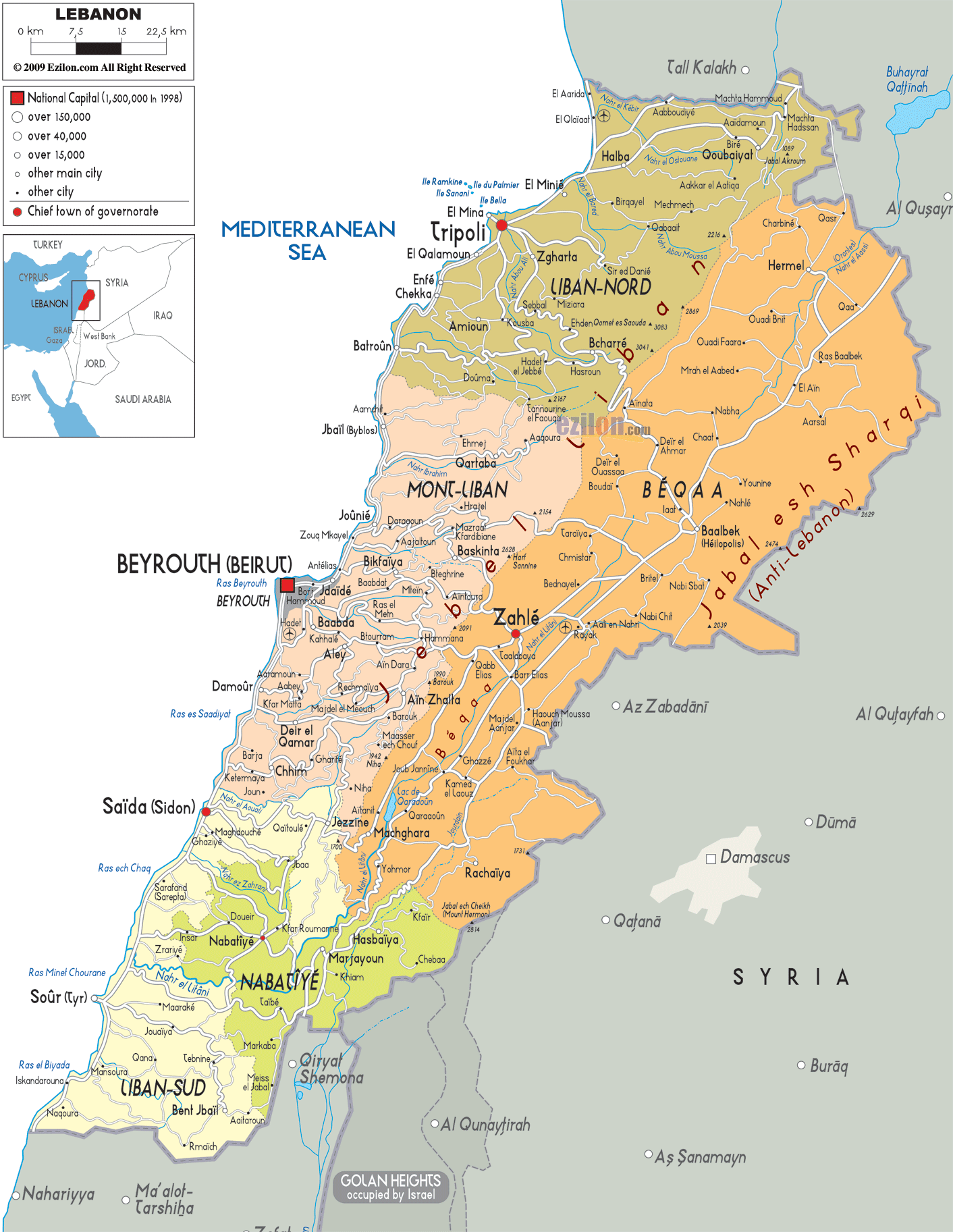
Description: Detailed large political map of Lebanon showing names of capital city, towns, states, provinces and boundaries with neighbouring countries.
 Lebanon
is situated in the Middle East and touches borders with
the Syrian Arab Republic and Israel. Its capital Beirut
was once known as the Paris of the East and has a
dominating position over the Mediterranean Sea with the
backdrop of towering mountains. The Corniche seafront is
stringed with beaches, restaurants, theatres and shops.
The official language is Arabic and both French and
English are widespread.
Lebanon
is situated in the Middle East and touches borders with
the Syrian Arab Republic and Israel. Its capital Beirut
was once known as the Paris of the East and has a
dominating position over the Mediterranean Sea with the
backdrop of towering mountains. The Corniche seafront is
stringed with beaches, restaurants, theatres and shops.
The official language is Arabic and both French and
English are widespread.
The country’s landscape is mountainous with a fertile
plain called the Bekaa Valley enclosed by the mountain
ranges of Mount Lebanon and Mount Hermon. Although
Lebanon is a small country it offers a diverse scenic
landscape, with cedar trees growing in the mountains,
and fertile terraced slopes where grapes, apricots,
plums, peaches and olives are grown. Along the coastal
area other types of fruits and vegetables are also
grown.

Physical Map of Lebanon
Physical map and map image of Lebanon.

Road Map of Lebanon
Road map and map image of Lebanon.

Regional Directory of United States of America
Information and guide about United States of America and websites with American topics.

Regional Directory of Europe
Information and guide about Europe and websites with European topics.

Regional Directory of Australia
Information and guide about Australia and websites with Australian topics.