ABOUT Finland
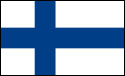 Country Briefs: Finland is a Nordic country that is located between Sweden and Russia in the North Eastern Europe. Finland borders the Baltic Sea, the Gulf of Bothnia and the Gulf of Finland.
Finland spreads over an area of more than thirty-three thousand kilometers and its population is over five million people.
The capital city of Finland is Helsinki. It is also the largest city in the country. Helsinki is a conurbation of cities, Espo, Vantaa and Kauniainen. Taken together these are labeled as the capital area.
Finland has a rich historical background. Finland was inhabited in the pre-historic era during the Stone Age. The inhabitants of course were the hunter-gatherers. Over the years these people commenced fishing, pottery and other such activities. They also developed contacts with Scandinavia and Russia.
These relationships with Scandinavia and Russia enhanced during the Bronze Age and the Iron Age. This is very well depicted in the in the life histories of several Finnish kings. The Kvens i.e. the pre 20th century north Scandinavian people of Finnish origin are particularly referred to in this context.
In 1154 Finland became a part of the Kingdom of Sweden and remained so till another 700 years. Meanwhile the Swedish King Erik who reigned from 1150 to 1160 tried to introduce Christianity in the country.
Russian forces virtually captured Finland twice during the 18th century. Finland was under the control of Russia from 1714 to 1721 and from 1742 to 1743. The Finns termed it as the Greater Wrath (the Great Northern War) and the Lesser Wrath (the Hat's Russian War) respectively.
Over the years the term Finland was successfully and uniformly used for the area, both in domestic Swedish debate and in Russians promising protection from Swedish repression.
But Finland came under the Russian domination in 1808. The Russian Emperor Alexander I ruled the region at that time. From then till 1917 Finland served as an autonomous Grand Duchy of the powerful Russian empire.
In 19th century around 1860 the Grand Duchy of Finland witnessed a wave of nationalism. There was a strong nationalist movement known as Fennomnia that attempted to raise the Finnish language and Finnish culture from peasant status to the position of a national language and a national culture.
The Fennomans were successful in their goals and in 1892 the Finnish was legitimately recognized as a language that was parallel in status to the Swedish. It was during this time that the Finland's national epic the Kalevala was published.
Finland announced its liberation after the Bolshevik revolution in Russia around 1917. The Parliament of Finland adopted the Finland Declaration of Independence on 6th December 1917.
According to from an autonomous Russian Grand Duchy Finland was to be recognized as an independent and sovereign nation state. The Bolshevist Russia approved of Finland's proposal but due to the civil wars in Russia things could not materialize then.
In 1918 Finland became the arena for the civil war between the Whites that represented imperial Germany and the Reds, supported by Bolshevist Russia.
In the course of Second World War Finland fought two major wars against Sweden - the Winter War in 1939 to 1949 and the Continuation War that took place between 1941 and 1944. Immediately after the continuation war Finland waged the Lapland war in 1944 to oust the Germans out of Northern Finland.
After the Second World War Finland did fell in the grey zone between western countries and the Soviet Union. Following the agreement of friendship, cooperation and mutual assistance (6th April 1978) the Soviets deterred allied powers from attacking the Soviet Union through Finland and the Finns started augmenting their political independence from Soviet Union.
The agreement ensured Finland as a capitalist democracy and granted it the right to resist armed attacks by Germany and its allies. It is noteworthy that unlike other bordering nations to Soviet Union, Finland successfully maintained its democratic government and market economy.
The collapse of Soviet Union in 1991 was a great setback to Finland too. But the Finns did not let it affect them for a long time. They progressed speedily and joined European union in 1995.
Finland Provinces
- Province: English name of province.
- HASC: Hierarchical administrative subdivision codes.
- ISO: Province codes from ISO 3166-2. For full identification in a global context, prefix "FI-" to the code (ex: FI-OL represents Oulu).
- FIPS: Codes from FIPS PUB 10-4, a U.S. government standard.
- Population: 1997-12-31 estimate.
- RCs: Regional councils contained in the province, using codes from Finland Interior Ministry.
