ABOUT Jersey
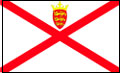 Country Briefs: Nestled in Western Europe in the English Channel, northwest of France, Jersey is a wonderful island of the British Isles. Covering an area of 116 square kilometers though Jersey is small yet it is the largest and southernmost of the Channel Islands.
While on the one hand Jersey parades a breathtaking natural beauty on the other hand the island has a myriad of hidden treasures waiting to be explored.
But Jersey was not an island since the time of its existence. Originally the Channel Islands formed part of the Duchy of Normandy in France. Jersey got its name as a result of the Viking activity in the region between 9th and 10th centuries.
The islands continued to be a part of the Duchy of Normandy until 1204 when the King Philippe Auguste of France overpowered the duchy. The islands were the personal belongings of the king and were named as Peculiar of the Crown. Jersey thus rejoiced an independent self-government since the division of the Duchy of Normandy in 1204.
During the Hundred Years of War the Channel Islands were attacked several times and was even occupied during 1380s. From 1461 to 1468, during the Wars of the Roses, the French occupied the island.
In 1646 and 1649 Charles II visited the island. The island came under the parliamentarian forces during 1651. Towards the end of 17th century Jersey fortified its links with the Americans and then many islanders emigrated to New England and northeast Canada.
On 24th February 1768 the oldest Commonwealth, the Chamber of Commerce was founded. For the first time in the history of the island, The Code of 1771 laid down the extant laws of Jersey.
During the 18th century the island witnessed extreme political tensions and war threats due to clashes between Britain and France. The island was invaded twice during the American Wars of Independence that took place from 1775 to 1783. The island was completely transformed during the French Revolutionary and the Napoleonic Wars. In 1799-1800 around 6000 Russia troops housed Jersey.
During the 19th century Jersey became one of the largest wooden shipbuilding areas in the British Isles. At the end of this century the cider and the wool industries suffered a setback while the Jersey cow and the Jersey Royal potato came to prominence and quite beneficial for the farmers of the island. The island?s tourism industry also witnessed a boom during this century.
In 1901 English was first permitted in the States of Jersey and the first legislation to be drawn up primarily in English was the Income Tax Law of 1928. During 1940 and 1945 German troops invaded the island.
This led to countless islanders fleeing away from the region. From 1944 to 1945 the islanders suffered greatly in terms of basic necessities when Jersey was cut off from the German-occupied Europe by the Allied forces coming from Normandy.
9th May is celebrated as the Liberation Day of the island. During the Second World War the Channel Islands were the only British soil captured by German troops.
