ABOUT Portugal
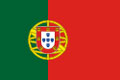 Country Briefs: Spread in a small area of 92,391 square kilometers Portugal is a country that has countless reasons to fascinate you and make your vacation a dream come true. From superb beach resorts, beautiful towns and extensive landscapes adorned with vineyards, olive greens and wheat fields, Portugal has it all.
Portugal is located in southwestern Europe, in the west and southwest parts of the Iberian Peninsula. Portugal is bordered by Spain in the north and east and Atlantic Ocean in the west and south.
With an estimated population of 10,566,212, Portugal is also famous for the hospitality, humble, simple and traditional attitude of the Portuguese people.
The capital of Portugal is its largest city Lisbon. Lisbon is one of the most enjoyable cities in Europe today. Its scenic splendor, Art Nouveau buildings, mosaic pavements, street cafes and wonderful location on seven low hills beside a river conjointly make it a city worth visiting.
But looking back we find that Portugal was never the same as it is today. On pondering over the past of Portugal it is revealed that Portugal was a land of Celts in the first millennium BC. In 219 BC Romans won Portugal.
In 5th century BC the Iberian Peninsula came under the domination of Germanic tribes particularly the Suevi and the Visigoths. In 711 an Islamic invasion happened in the region. In 868 when Count Vimara Peres re-captured the region, it was given the title of Potucale due to its most important city Portucale or Porto.
Twenty years later the Count of Henry from Burgundy was appointed the Count of Portugal. After Henry's death his son Afonso Henriques took over the county. In 1128 Afonso I waged the Battle of Sao Mamede. This battle led to the emergence and recognition of Portugal as a nation.
After suffering from the Black Death, Lisbon earthquake and tsunami, in 1801 the Portuguese got involved in the Napoleonic Wars.
Liberalism marked Portugal during 19th century. The country went through civil wars between 1832 and 1834 that was followed by immense political instability in the country.
Due to a republican revolution the Portuguese monarchy came to an end in 1910. This led to the First Republic Political chaos, strikes etc with the Catholic Church. Soon after the Portuguese intervention in the first world war led to the 28th may 1926 coup d'etat, a military action that ended the Portuguese First Republic and commenced the Ditadura Nacional or National Dictatorship that lasted till 1974.
In 1974 there took place the Carnation Revolution in Portugal. This revolution was to meant to establish a new democratic regime. As a result General Spinola came to power. In 1975 free multi-party elections were held in Portugal for the first time.
In 1976 Indonesia invaded and captured the Portuguese province of Timor in Asia. In 1999 East Timor voted for independence after a UN sponsored referendum.
The vote was accepted and materialized after a year, in 2000. Meanwhile in 1986 Portugal became a member of the EEC or the present day European Union.
Portugal Districts
- District: Azores and Madeira are autonomous regions.
- HASC: Hierarchical administrative subdivision codes.
- ISO: Codes from ISO 3166-2.
- FIPS: Codes from FIPS PUB 10-4.
- Tz: Time zones. Convert from UTC to local time by adding this number of hours. Tilde (~) indicates areas where daylight saving time is in effect during summer.
- Population: 2001-03-12 census.
- Region: Planning region containing the district (see following table). When a district is partly in two regions, the lesser portion is shown in parentheses.