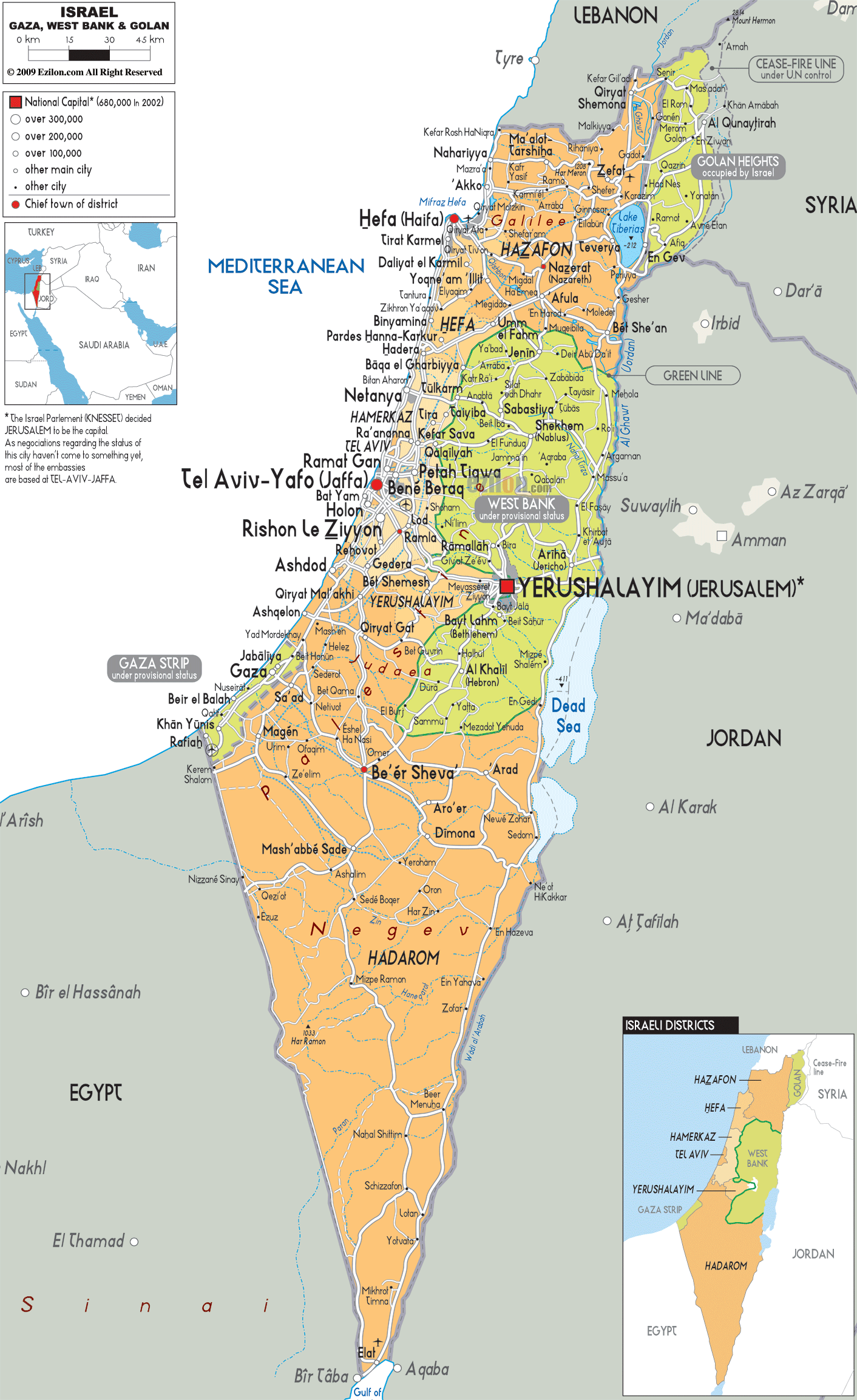
Description: Detailed large political map of Israel showing names of capital city, towns, states, provinces and boundaries with neighbouring countries.
 This
‘Holy Land’ situated in the Eastern Mediterranean shares
its borders with Lebanon, the Syrian Arab Republic, the
Palestine National Authority, Jordan, Egypt and Gaza.
Jerusalem its capital and worldwide center of religion,
though the UN does not recognize it as so, claiming it
to be Tel Aviv. Hebrew and Arabic are the official
languages, although many other languages are spoken
throughout the country, including English, French,
German, Hungarian, Polish, Romanian, Russian, Spanish
and Yiddish.
This
‘Holy Land’ situated in the Eastern Mediterranean shares
its borders with Lebanon, the Syrian Arab Republic, the
Palestine National Authority, Jordan, Egypt and Gaza.
Jerusalem its capital and worldwide center of religion,
though the UN does not recognize it as so, claiming it
to be Tel Aviv. Hebrew and Arabic are the official
languages, although many other languages are spoken
throughout the country, including English, French,
German, Hungarian, Polish, Romanian, Russian, Spanish
and Yiddish.
Israel is small in size but has a varied landscape from
the fertile hills in Galilee with Mount Hermon and Golan
to the Negev Desert and Eliat on the Red Sea. The Great
Rift Valley goes from the River Jordan sources to the
Dead Sea; this is the lowest point in the world, then
onto the Red Sea and Kinneret (Sea of Galilee), which is
in fact Israel’s biggest freshwater lake.

Physical Map of Israel
Physical map and map image of Israel.

Road Map of Israel
Road map and map image of Israel.

Regional Directory of United States of America
Information and guide about United States of America and websites with American topics.

Regional Directory of Europe
Information and guide about Europe and websites with European topics.

Regional Directory of Australia
Information and guide about Australia and websites with Australian topics.