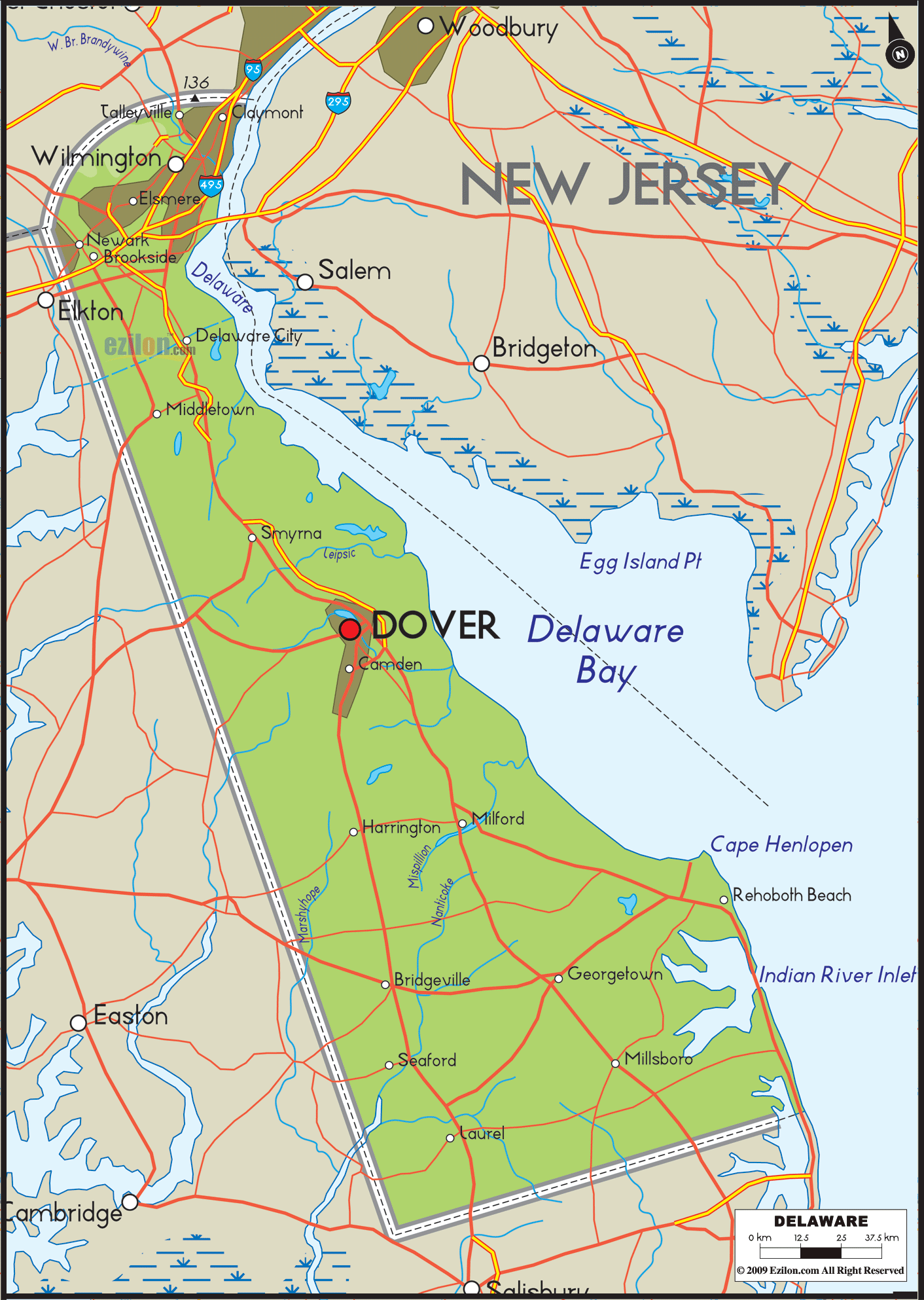
Description: The Physical map of Delaware State USA showing major geographical features such as rivers, lakes, topography and land formations.
 Detailed Physical map of Delaware with elevations and other topographic features such as mountains, rivers and lakes. For county boundaries, cities, and roads, see our County and Road Map of Delaware. Delaware borders Maryland, Pennsylvania and New Jersey.
The Piedmont nicks the far north around Wilmington with low rolling hills, and then the rest of the state is the Atlantic Coastal Plain. On a Physical Map of Delaware, darker relief shading and tight contours hug the hills near the Pennsylvania line, while most of the map shows low, level land with tidal creeks, marshes, and dunes along the open coast. The capital Dover lies close to the center, a few miles west of Delaware Bay.
The only real high ground in Delaware sits around Wilmington, Talleyville, and Claymont. It’s not mountainous, but the bedrock hills are higher and more dissected than the rest of the state. Small streams, short ravines, and rockier ground show up as tight shading around the I-95 / I-495 loop. This is where the Fall Line transitions to the sandy coastal plain. If you see the shading pinch near the Delaware River here, you’re looking at bluffs that give the port its height above the water.
From Middletown and Smyrna through Dover, the plain is broad, gently rolling, and wet. Blue dashes and short blue lines on the map mark tidal creeks, drainage ditches, and back-bay marshes that feed Delaware Bay. The C&D Canal (Chesapeake & Delaware Canal) slices across the upper plain near Delaware City, a straight waterway that links the Delaware River to the Chesapeake system. Marsh symbols north and south of the canal help you spot the low, flood-prone ground.
South of Milford and Harrington, the land is extremely flat. The Nanticoke River flows southwest through Bridgeville, Seaford, and Laurel toward the Chesapeake. East of Georgetown, sandy barrier features line the Atlantic, with the Indian River Inlet cut through the spit and Cape Henlopen at the mouth of Delaware Bay. Rehoboth Beach is the best-known resort label on the open coast. Seasonally, wind and tides move sandbars here, which is why the inlet is a clearly marked navigation break on the map.
The Delaware River runs along the state’s northeast edge from Wilmington to Delaware Bay. The bay widens rapidly opposite New Jersey’s marshy shore near Salem and Bridgeton. On a geographical map of Delaware, look for the estuarine texture: rakes of blue sloughs and ponds at the bay margins indicate broad tidal marsh.
Shallow, tide-controlled creeks reach far inland between Smyrna and Milford. The map shows many short blue threads and ponds that feed into Delaware Bay near Leipsic and Delaware City. These sheltered waters are the reason towns sit a few miles inland on firmer ground rather than directly on the marsh edge.
The Indian River Inlet is the key opening through the barrier strand between Bethany Beach and Rehoboth Beach. Inland lagoons and back-bay waters drain through this cut. The coast arcs north to Cape Henlopen, a sandy point that forms the bay mouth and shelters the coast to the south from direct Atlantic swell.
On the west side, streams like the Nanticoke and its branches drain through forested swales and farm ditches. The map’s blue lines in Seaford, Laurel, and Bridgeville trend southwest, showing you the gentle watershed divide that runs down the peninsula: water east of the crest goes to Delaware Bay/Atlantic, water west goes to the Chesapeake.
Estuarine bays and marshes: North of Cape Henlopen along Delaware Bay, the coastline is muddy, shallow, and edged with long marshes.
Barrier strand and dunes: South of Cape Henlopen, the Atlantic shore becomes sandy with spits and a maintained inlet at Indian River Inlet.
Harbors and canals: Delaware City and the C&D Canal provide sheltered water linked to the river.
These differences are easy to see in the symbology: mudflats and marsh have fine blue textures; barrier beaches form simple pale strips; straight cuts indicate artificial channels.
Outside Wilmington’s hills, elevations are low—often under 100 feet—so groundwater, ditches, and tides shape the map. Sandy soils near the Atlantic make broad pine-oak woods and good drainage for beach towns. Finer silts along the bay side hold extensive salt marsh and wildlife areas, a pattern you can predict by the wider blue marsh marks.
Follow I-495 along the riverfront. The bluffs give way to flat marshes near Delaware City, where the straight C&D Canal appears. This is a classic field lesson in how bedrock hills drop into the coastal plain and how humans cut a canal at the flattest point.
Dover sits on a slight ridge between bay marshes to the east and St. Jones/Murderkill drainages to the south (local creeks often appear as unnamed blue lines on the state-scale map). The Physical Map of Delaware shows why the city avoids the wettest ground yet stays near waterways.
From Harrington and Milford down through Georgetown, Millsboro, Seaford, and Laurel, the coastal plain is vast and flat. The Nanticoke streams southwest; the Indian River system curves east to the inlet. Rehoboth Beach and Cape Henlopen anchor the ocean side.
Canal and river day: Walk the C&D Canal banks at Delaware City, then view the Delaware River widening toward the bay.
Capital Marsh Loop: From Dover, drive east to the bay edge to compare farm uplands with tidal marsh.
Beach and inlet lab: Visit Indian River Inlet to observe current, sand movement, and how the bridges sit where the channel is narrowest.
Watershed contrast: Compare Nanticoke (to Chesapeake) with short creeks to Delaware Bay near Smyrna—a perfect watershed boundary lesson.
Tides matter: Marsh roads near Delaware Bay can flood on spring tides.
Wind over water: Open fetch along the Atlantic side builds chop around inlets.
Hurricane season: Late summer and fall can reshape beaches; use marked access points and heed closures.
Winter freeze: Shallow back-bays may ice; avoid unmarked crossings.
Around Wilmington, bedrock lifts just enough to carve short, steep valleys. On the map, look for the tightest relief around the I-95 bend through Elsmere and Brookside. Ports and industry line the flatter river edge east of the bluffs, a location pattern typical of the Fall Line.
The canal’s straight geometry stands out compared to natural meanders. It links two huge estuaries, so it is kept deep and wide. Marsh texture north of the canal shows old Delaware River channels and backwaters; to the west, you can imagine the gentle divide toward Chesapeake creeks. For travelers, this strip provides biking paths and birding pull-offs with open views over the marsh.
As you track south along the map edge, the Delaware River broadens into Delaware Bay opposite New Jersey’s flats near Salem and Bridgeton. Tidal prism increases; the map shows this as vast mudflats and dendritic blue threads. The shoreline is remote and marshy, with towns a little inland on higher ground for flood safety.
Dover appears slightly inland on firmer sediments, yet close enough to bay creeks to move goods. Short blue lines point to shallow tidal sloughs east of town; to the west, the relief dries out, and roads run straighter over sandy interfluves.
North of Dover, the Smyrna-Leipsic zone shows some of the densest marsh symbols on the map. This is a classic estuarine plain: low gradient, extensive tidal range in shallow water, and abundant waterfowl. A detailed map helps students locate levees and causeways that cross these wetlands at narrow points.
At Milford, the coastal trend begins to curve south-southeast toward the Atlantic beaches. Small creeks bend with the shoreline, creating shallow ponds and coves behind the barrier strand.
Cape Henlopen forms because the longshore current pushes sand toward the bay mouth. On the map, the point is clean and sharp, with open Atlantic to the south and sheltered bay water to the north. This shape explains why Rehoboth Beach sits just down-coast in the wave-shadow of the cape.
The Indian River Inlet connects back-bay waters with the ocean, keeping the inside lagoons flushed. The narrow gap and causeway make it a field classroom for tidal hydraulics: fastest flow at the pinch point, calmer water expanding into the bay behind the bridge. Storms can move bars at the mouth; navigation markers and jetties stabilize the channel.
Georgetown stands near the interior hub. Millsboro straddles the Indian River system. Seaford and Laurel sit on the Nanticoke, whose blue line points southwest—your cue that water here drains away from the Atlantic. Agricultural ditches run arrow-straight; they’re drawn on the map as ruler-like blue and black drainage lines.
The peninsula’s subtle divide runs north-south between Indian River headwaters to the east and Nanticoke branches to the west. On the physical map, the clue is stream direction: two clusters of blue lines flowing opposite ways from a low ridge. Students can map the divide by marking the highest sandy spine between opposing creeks.
Pick a watershed (Nanticoke, Indian River, or Delaware Bay creeks). Trace headwaters to the mouth and note every named town along the channel.
Plan a coast-plus-interior day: start at Cape Henlopen, continue to Indian River Inlet, then drive inland to Georgetown and Seaford to compare dunes with forested swales.
Canal heritage loop: Begin at Delaware City, walk the C&D trail, then view ship traffic where the canal meets the river.
Bay marsh sunrise: Access a bay-edge pull-off east of Dover to watch the tide pour through narrow creeks marked on the map.
Low bridges and tide: Any thin crossing over marsh or inlet can flood in storms; pick high-ground routes inland when forecasts spike.
Storm cuts: Barrier beaches can shift; stay on signed paths near Indian River Inlet.
Flatland driving: Long, straight farm roads cross drainage ditches; watch for standing water after heavy rain.
Heat and insects: Marshlands hold bugs mid-summer; plan early or late.
Barrier strand: Long sandy shore with dunes and occasional inlets.
Estuary: Where fresh water mixes with seawater; wide at river mouths like Delaware Bay.
Watershed divide: The subtle ridge that splits flow directions.
Fall Line: The shift from hard rock uplands to soft coastal plain near Wilmington.
Relief shading: Darker shading for steeper slopes; lighter for flatlands.
Capital: Dover.
Largest city: Wilmington.
Physiographic regions: Piedmont in the north; Atlantic Coastal Plain across most of the state.
Signature waters: Delaware River and Bay, Indian River Inlet, Nanticoke River, C&D Canal.
Coastline: Marsh-rich Delaware Bay shore; sandy Atlantic beaches around Rehoboth and Bethany; cape and inlet at Henlopen and Indian River.
Neighboring states: Pennsylvania and New Jersey to the north/east; Maryland to the west and south.
Best seasons: Spring and fall for marsh and bay viewing; summer for beaches; winter for quiet inland trails.
Orientation corridors: I-95/I-495 around Wilmington; DE-1 along the coast; US-13 and US-113 down the peninsula.
Note: Printing or copying maps from the site is not permitted.
South of Wilmington opposite New Jersey’s marsh coast near Salem and Bridgeton, where the channel opens into a broad estuary.
The Chesapeake & Delaware Canal (C&D Canal) linking the Delaware River to the Chesapeake system.
Dover, near the center of the state a short drive west of Delaware Bay.
At the mouth of Delaware Bay on the Atlantic side, just northeast of Rehoboth Beach.
Look for a narrow opening through the barrier strand south of Rehoboth Beach labeled Indian River Inlet.
The Nanticoke River and branches flowing past Bridgeville, Seaford and Laurel trend southwest to the Chesapeake.
The Piedmont upland reaches into northern Delaware, creating low bedrock hills and bluffs above the river.
Along Delaware Bay east of Dover and north toward Delaware City, shown by dense blue marsh patterns.
Rehoboth Beach near Cape Henlopen and the communities south of Indian River Inlet along the barrier shore.
US-13 and US-113 inland, with DE-1 closer to the coast; I-95/I-495 serve the Wilmington corner.
Outside the Wilmington hills, elevations are very low; most land is flat coastal plain with gentle relief.
It runs down the interior of Sussex County: streams east flow to Delaware Bay/Atlantic, streams west flow to the Nanticoke and Chesapeake.
Middletown, Smyrna and Dover, with Harrington and Milford farther south on the plain.
Canals are straight with uniform width, like the C&D; natural rivers meander and widen near their mouths.
Just east and northeast of the city along short tidal creeks that empty into Delaware Bay.
Cape Henlopen, a sandy point that shelters the coast immediately to the south.
Bridgeville, Seaford and Laurel, with the river trending southwest toward the Chesapeake.
Anywhere the map shows dense blue marsh symbols along Delaware Bay and around tidal creeks. Choose higher inland routes during storms.
Indian River Inlet on the Atlantic shore, clearly labeled and crossed by a bridge at the narrowest point.
North around Wilmington and Claymont where the Piedmont meets the Delaware River.
DE-1 parallels the Atlantic shore south of Milford and connects beach towns with the inlet area.
The bay side has marsh textures and muddy edges; the Atlantic side shows sandy barriers and a narrow, clean shoreline.
Georgetown sits near the interior hub with roads branching east to the beaches and west to the Nanticoke.
Just inland on the lower plain north of the beach corridor, between bay creeks and the Atlantic strand.
Around Cape Henlopen, where the Delaware Bay opens to the Atlantic beside Rehoboth Beach.
Find the Piedmont shading at Wilmington for the highest ground; expect nearly level terrain everywhere else.
Middletown, Smyrna, Dover, Harrington, Bridgeville and Seaford with Laurel near the state's south end.
No. Printing or copying maps from the site is not permitted.
Start at Cape Henlopen or Indian River Inlet, then drive inland to Georgetown and Seaford to compare dunes, marsh and river valleys.
The straight C&D Canal and many ruler-straight drainage ditches on the lower plain.

Counties and Road Map of Delaware
Counties and Road map and map image of Delaware.

Regional Directory of Canada
Information and guide about Canada and website listing.

Regional Directory of United States of America
Information and guide about United States of America and websites with American topics.

Regional Directory of Europe
Information and guide about Europe and websites with European topics.

Regional Directory of Australia
Information and guide about Australia and websites with Australian topics.