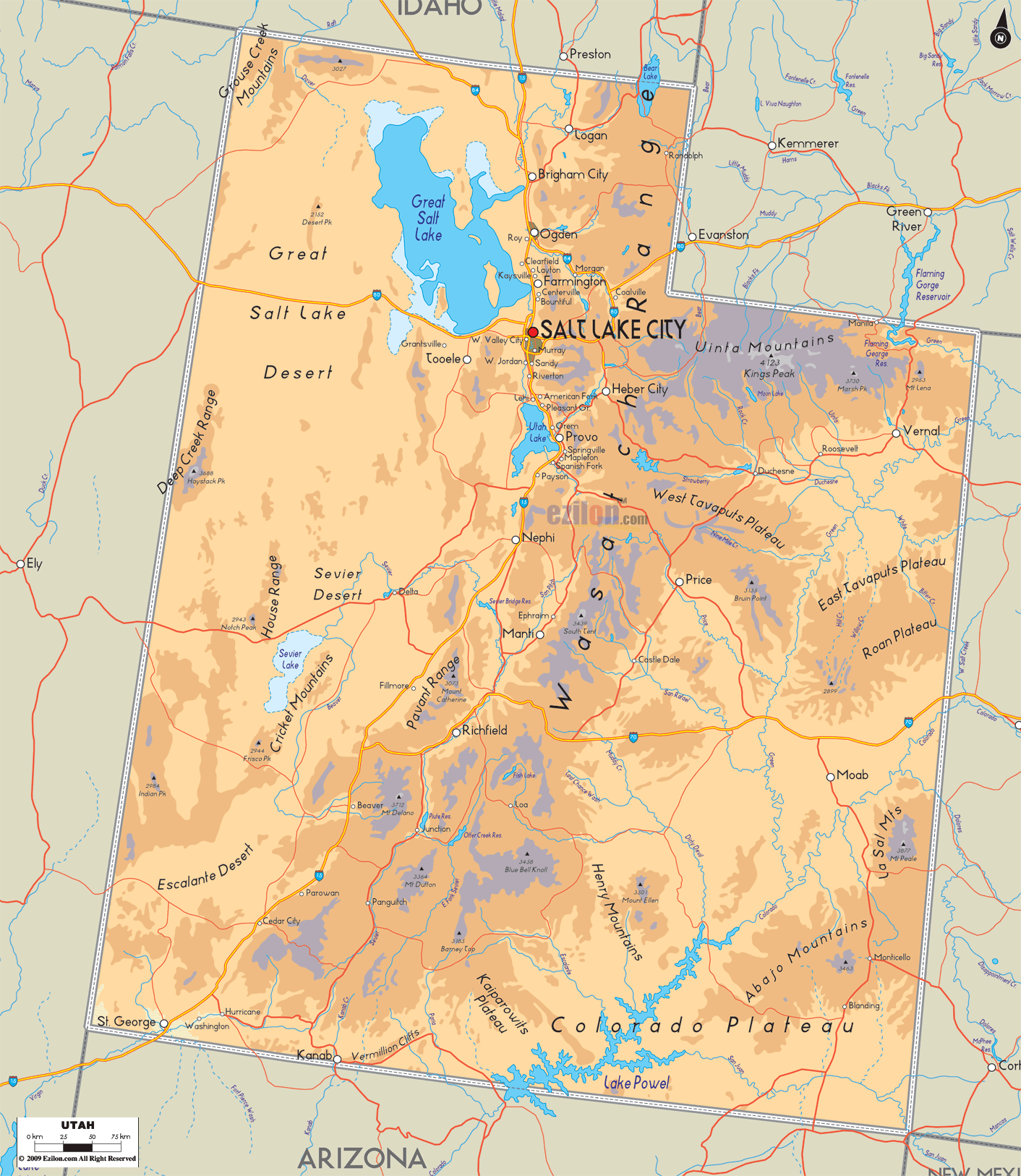
Description: The Physical map of Utah State, USA showing major geographical features such as rivers, lakes, mountains, topography and land formations.

Detailed Physical map of Utah with elevations and other topographic features such as mountains, rivers and lakes. For county boundaries, cities, and roads, see our County and Road Map of Utah. Utah borders Idaho, Wyoming, Colorado, New Mexico, Arizona and Nevada. The map makes Utah's terrain easy to follow because it shows the state's major landforms in broad, readable zones, then layers in rivers, lakes, reservoirs, mountain ranges, plateaus, deserts, and key cities so you can connect the geography to real places.
Utah sits at a crossroads of the American West. On our map, you can see Utah bordered by Idaho to the north, Wyoming to the northeast, Colorado to the east, Arizona to the south, and Nevada to the west. Utah also borders New Mexico at the Four Corners, which is part of why the Colorado Plateau region is so vital in the state's southeast.
A glance at the shading explains Utah's story. The highest mountains and steep plateaus are represented in the darker relief zones. The lighter-tan zones represent broad basins, deserts, and lower-elevation plains; water blues track the desolate Great Salt Lake to the jagged shorelines of Lake Powell, southern highlands. Roads and cities help residents, travelers, and students understand what they see.
In the north-central portion of the map, the Great Salt Lake stands out immediately as a large blue inland sea. It sits within a broad basin where the surrounding land is relatively flat compared to Utah's mountains. West of the lake, the map labels the Great Salt Lake Desert, a vast, arid area that stretches toward the Nevada line. This desert is shown in pale tan, signaling low relief, sparse vegetation, and long distances between towns.
The lake's location explains much about the settlement. Salt Lake City, according to the map, is positioned just southeast of the Great Salt Lake, where the basin begins to rise. Cities neighboring Ogden, Farmington, and Brigham City can be seen to align along an easy-to-recognize north-south corridor that follows the edge between mountain slopes and valley floors.
East of Salt Lake City, the Wasatch Range forms a dramatic wall of high terrain. On the map, the range is shown with stronger relief shading, emphasizing steep slopes and higher elevations. This is why the "Wasatch Front" exists as a narrow, busy belt where cities cluster on the lower ground while peaks rise sharply behind them.
You can trace how roads thread through this region. There are routes from Logan in the north down past Ogden and Salt Lake City toward Provo and the central valleys. This is a clear example for geography students of how mountains shape transportation networks and influence the development of larger metro areas.
Moving southwest and south from the Salt Lake basin, the map labels the Sevier Desert, another central low-relief zone. Deserts on this physical map are not shown as a single uniform area. Instead, you can see them broken into basins separated by ranges and uplifts, a classic Basin and Range pattern that continues toward Nevada.
The House Range and nearby highlands are dark against a lighter desert background. They show how isolated mountains can rise from broad basins. Smaller anchors are located in Delta, Fillmore, and Richfield, which are towns in open space.
As you move further east on the map, the ground rises again and becomes plateaus and highlands. You can improve or modify this sentence. These plateaus rise above surrounding valleys in a step-like manner and affect the courses and routes of rivers.
Near this region, you can spot Price, a key city on the map. Price's location makes sense when you see the surrounding plateau country. It acts as a passageway from the Wasatch Front to the eastern canyons and basins.
The Uinta Basin, a wide structural basin surrounded by highlands, is located in eastern Utah. The Green River is a prominent blue line that goes southward through Utah toward the Colorado River system. Nearby, the map shows Flaming Gorge Reservoir just over the border to the northeast, reinforcing the role of reservoirs in western water management.
Cities such as Vernal appear close to the basin and river system. For researchers and students, this is a helpful area to study basin topography, river incision, and the way roads follow gentler grades along valley floors.
One of Utah's defining landforms is the Uinta Mountains, shown on the map as a broad, elevated region east of the Wasatch Front and north of the Colorado Plateau. The map labels the mountains across that area and indicates high-elevation peaks, including the Kings Peak area. This terrain is higher, colder, and more rugged than the surrounding basins and deserts.
This range is important because it shapes drainage. The rivers and streams that flow from these heights flow into systems that go toward the Green River and toward the Great Basin side in other directions. You can get an idea of the slope's direction from the relief shading and the rivers' positions.
In the south, the map clearly labels the Colorado Plateau, a vast uplifted region that differs from the Basin and Range deserts to the west. Within the plateau country, the map highlights the Kaiparowits Plateau, an area known for high, rugged tablelands. The terrain here shows a mix of elevated plateaus and carved drainages that lead toward the Colorado River system.
Towns like Kanab appear in the south-central part of the map. It indicates an area of human scale amid plateaus and cliffs. This is an area in Utah where the distance feels larger than it really is, and the roads on the map make you think.
At the southern end of Utah, a blue reservoir with a jagged outline is Lake Powell. The lake's narrow shape and arms suggest the beauty of the canyon country. Render the passage in your own words. Avoid rewriting the whole passage to make your point. Use a citation for any text you choose to employ.
Nearby, you can see the relationship between the plateau uplands and water. Higher relief zones surround the lake, while river channels and tributaries feed into it. For geography students, Lake Powell provides an excellent example of a reservoir created within canyon terrain, where flooding can extend far up side canyons and tributary valleys.
In the south-central and southeastern areas, the map labels the Henry Mountains and the Abajo Mountains. These mountain groups rise above the plateau country, and the relief shading around them makes them easy to locate. The Abajo Mountains are shown near the route toward Moab, which sits just outside the map's primary focus area on the eastern side.
These ranges help explain why Utah's southern terrain is not "flat desert." The physical map sh ws a landscape of plateaus, isolated mountain blocks, river corridors, and reservoirs. That mix is what makes southern Utah one of the most visually dramatic regions in the United States.
Salt Lake City is used as the map's focal point. The presence of the Great Salt Lake basin to the west and the Wasatch Mountains to the east explains why it is Utah's central City. From the metro area, roads radiate north toward Logan and south into central Utah. The east-west streets are used to transport goods from the plateau country to the desert basins and the Nevada line.
The map shows St. George near the Arizona border in the southwest. St. George is a place where they begin to experience the warmer desert landscape and the canyon edge. Cedar City is located further north, in an area of higher elevation, and acts as a gateway that connects the plateau country.
For residents, this detailed map supports a better sense of regional identity: the Great Basin side, the Wasatch Front, the eastern basins, and the Colorado Plateau side. For travelers, the cylinders assist in route choices that match the terrain of your choosing – the lake mile, mountain drive, or plateau scenery. It brings together the physical regions of a country and their hydrology, along with transport corridors and settlements, in a single frame for students and researchers.
All users, please note that the Ezilon Utah map is for online viewing and reference only. You must not print it, copy it, download it, or redistribute it.
The map highlights the Great Basin deserts, the Wasatch Range corridor, eastern basins like the Uinta Basin, and the Colorado Plateau with Lake Powell in the south.
The Great Salt Lake sits in north-central Utah near Salt Lake City and marks a major closed-basin water feature that influences nearby valleys and settlement patterns.
The map uses stronger relief shading for the Wasatch Range while placing cities like Salt Lake City, Ogden, and Provo along the lower valley edge of the mountains.
It is a broad, arid basin west of the Great Salt Lake, shown as pale terrain where long distances and sparse drainage are common.
On the map, the Green River generally flows southward through eastern Utah toward the greater Colorado River system.
The Uinta Mountains lie to the east and northeast of Salt Lake City, shown as a high elevation belt above the surrounding basins.
It shows how the route stays within valley floors along the Wasatch Front, with mountains rising sharply to the east and the Great Salt Lake basin to the northwest.
The Sevier Desert is a low, dry basin region in west-central Utah, while plateau areas are higher, more elevated uplands shown with stronger shading and carved drainages.
Lake Powell lies along Utah’s southern border near Arizona, and its jagged shoreline suggests flooded canyon country within the Colorado Plateau.
The map labels major plateau zones including the Wasatch Plateau and the West and East Tavaputs Plateaus, rising above nearby basins and valleys.
The Uinta Basin is a broad basin in eastern Utah that organizes drainage and road corridors and sits near the Green River system shown on the map.
Salt Lake City, Provo, Ogden, Logan, Price, Vernal, Cedar City, St. George, Kanab, and Moab help anchor the terrain zones shown across Utah.
They appear in south-central Utah as an isolated mountain group rising above plateau and canyon country.
The Abajo Mountains are in southeastern Utah, and Moab is a well-known nearby gateway for travel and outdoor routes.
You can see pale desert basins in the west transition into darker, higher plateaus and mountain blocks toward central and southern Utah.
Utah borders Idaho, Wyoming, Colorado, Arizona, and Nevada, and the state names around Utah’s outline confirm these neighbors on the map.
On the map, these reservoirs sit on major river systems and store water for downstream use, recreation, and seasonal flow management.
Darker shading indicates higher or steeper terrain such as mountain ranges and plateau edges, helping readers understand slope and elevation changes on the map.
The map shows a north-south corridor along the Wasatch Front valleys linking Logan, Brigham City, Ogden, and the Salt Lake City area.
No, the Ezilon Utah map is for online viewing and reference only and must not be printed, downloaded, copied, or redistributed.
They can compare desert basins like the Great Salt Lake Desert and Sevier Desert against mountain and plateau zones like the Wasatch Range and Uinta Mountains shown on the map.
Valley floors offer flatter terrain, easier travel routes, and access to rivers and reservoirs compared with steep mountain slopes and high plateaus.
It is an elevated plateau region in southern Utah within the Colorado Plateau area, shown near the route corridor toward Lake Powell.
The map shows these plateaus as higher blocks that funnel roads into valleys and passes, shaping east-west travel between central and eastern Utah.
Its location near the Great Salt Lake basin, river-fed valleys, and the Wasatch mountain foothills created a strategic and livable corridor for settlement.
The map helps trace southern routes across plateau edges and desert zones, showing where towns, highways, and water features guide realistic driving segments.
Lake Powell lies within the Colorado Plateau's canyon terrain, and the map shows how reservoir arms extend into carved tributary valleys.
Water features such as the Great Salt Lake, Flaming Gorge area, and Lake Powell support boating, fishing, and shoreline access where roads reach the water.
From north to south, Utah moves from basin-and-lake country near the Great Salt Lake into plateaus and deserts, then into Colorado Plateau canyon terrain near Lake Powell.
A physical map gives broad terrain context like mountains, deserts, plateaus, and river corridors that GPS screens often hide, improving route understanding and trip planning.

Counties and Road Map of Utah
Counties and Road map and map image of Utah.

Regional Directory of Canada
Information and guide about Canada and website listing.

Regional Directory of United States of America
Information and guide about United States of America and websites with American topics.

Regional Directory of Europe
Information and guide about Europe and websites with European topics.

Regional Directory of Australia
Information and guide about Australia and websites with Australian topics.