

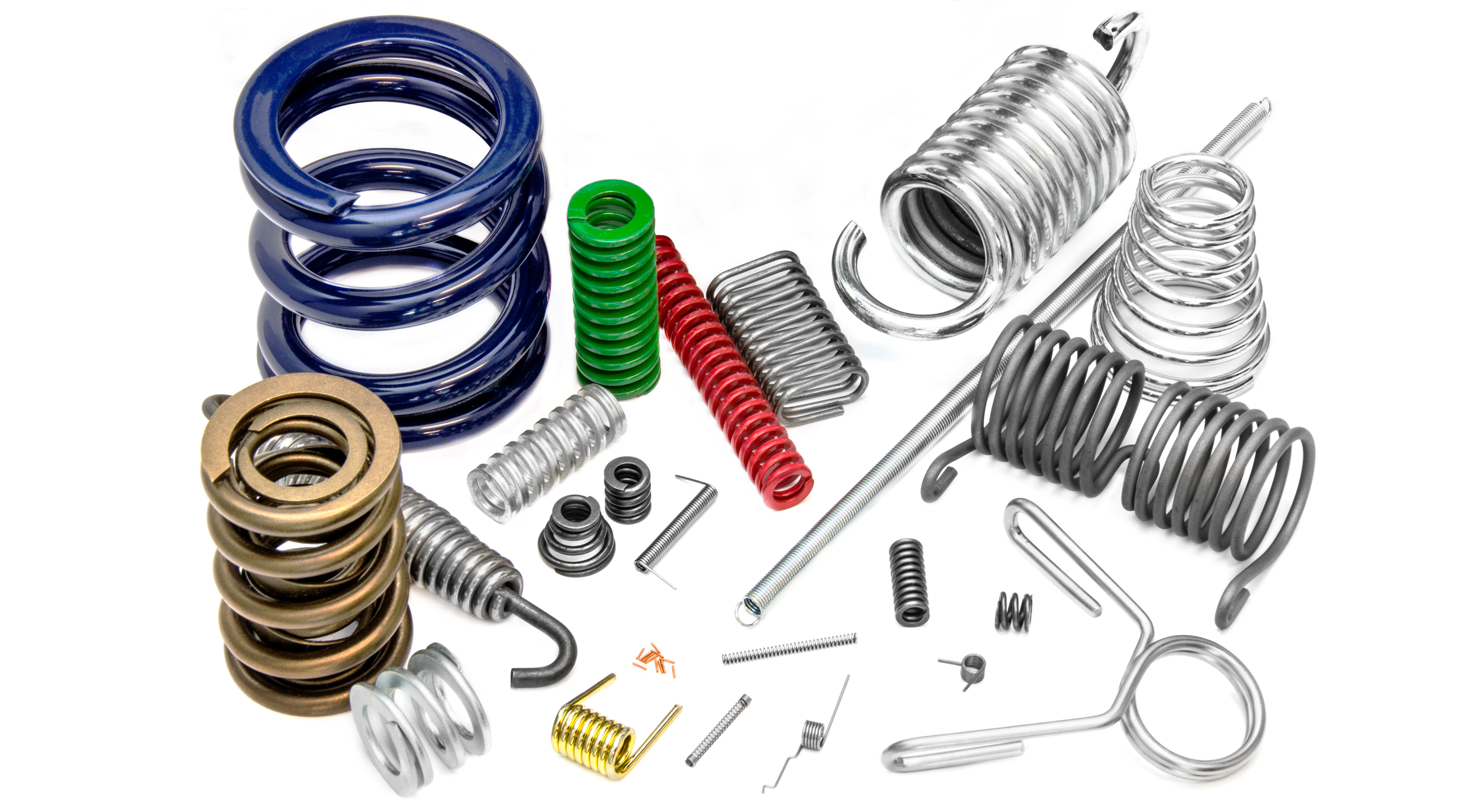
Material selection affects a spring’s strength and fatigue life, as well as its service value, even before production. A weak match can affect part life, reduce load accuracy, and expose the assembly to premature failure under stress. This is why you need a close examination of material behavior in spring design.
The best compression springs are achieved by selecting the right material that matches the load, environment, and duty cycle.
An intelligent strategy does not focus on just one property, since strength, corrosion resistance, and heat response affect final performance. The subsequent sections clarify the material selection process that underpins improved spring performance in demanding applications.
Match the Material to the Load Profile
A spring that will encounter considerable stress must have a strong but elastic material. If the Material’s deformation after compression is not too recoverable, then it may lose force or deform too early. The spring’s load profile should guide initial material selection, as it defines the spring’s mechanical requirements daily.
The needs of high-cycle applications are addressed here. Repeated compression can reveal latent weak fatigue resistance even when the initial appearance is good. A better material fit enables the spring to maintain its load characteristics for longer life.
Evaluate Environmental Exposure
Moisture and Corrosion Risk
If the Material is not sufficiently resistant to moisture, chemicals, and exposure, spring life will be reduced. In these instances, stainless steel or coated surfaces may provide a better long-term value than standard carbon steel. Look at environmental risk early, as corrosion can soften force consistency and surface integrity.
Heat and Temperature Variation
Temperature affects stability, kinetic efficiency, and long-term retention. A spring that works at room temperature may not work after exposure to high heat. In an ideal world, the Material used reflects the product’s actual hot condition, not the load required.
Balance Strength With Formability
It is important for a material to exhibit high strength but also to coil accurately and produce sound properly. A very hard alloy may provide good load capacity, but is more difficult to manufacture or finish. A careful material strategy should enable practical production without compromising spring performance.
The manufacturer’s ability plays a big part in spring quality. An expert producer needs to know how to form a high-strength material with precision while controlling dimensional accuracy, surface condition, and consistency. The knowledge helps ensure that the finished compression springs meet the load requirements without compromising fit, durability, or repeatable performance.
Review Fatigue Demands and Surface Condition
Cyclic Stress and Endurance
Many spring applications rely on fatigue performance for effectiveness. A spring will compress and release many times, so it must be made of a material that will not crack. When selecting products for automotive, industrial, and high-duty applications, one should use endurance limits.
Surface Quality and Protective Finish
Believe it or not, surface condition may have a greater influence on fatigue life than one might think. When the finishing, scale, or other small defects are improper, they create weak points which shorten the life under repeated loading. Finish quality must be specified in the material strategy. This is because a smooth surface allows the component to perform better over a long period of time.
Consider Cost in Relation to Service Value
Although price is important, a low material cost is not always the best result. Besides, material selection should focus on service value over the spring’s full life. With the proper Material, maintenance demands are minimized, and forces become more stable.
The design of a high-performance spring starts with materials that reflect real operating conditions. Several factors, including load profile, corrosion risk, temperature, fatigue stress, formability, and service value, influence the result. The right spring material enables the spring to perform better and more reliably over longer periods.
