ABOUT Belarus
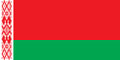 Country Briefs: To the east of Poland, in the Eastern Europe lies the beautiful state of Belarus. With a population of 10,300,483 Belarus spreads over 207,600 square kilometers.
Belarus is a popular nation for quite a few reasons. For instance Belarusian handicrafts, culture, historical monuments, scientific innovations particularly in field of nuclear physics etc. are famous across the globe.
Belarus is also known for its wonderful cities. The capital city of Belarus is Minsk. Minsk covers an area of 207,595 square kilometers and has a population of around 1767500 people. Minsk and other Belarusian cities are places worth-visiting. Conjointly taken these cities do not just make Belarus an important tourist destination but these cities are also paradigm instances of turbulent history of Belarus.
If we probe into the history of Belarus we find that in its early years Belarus was referred to as "White Russia". Jerome Horsey in 16th century was the first to make use of this term.
Bealrus was the territory of Slavs in the 6th and 8th centuries. Till date Slavs comprise a major part of Belarusian population. The Slavs came into contact with the Varangians (Scandinavians who traveled eastwards from Jutland and Sweden) and organized themselves under the state of Rus'. The Rus'area lies close to the contemporary Polatsk in the northern region of the country.
But the Mongols invaded the state in 13th century and occupied several parts of Rus'. Soon these parts came under the domination of Grand Duchy of Lithuania. The prominent duchy territories were Kernave, Trakai, Samogitia and Vilnius cities. The duchy territories waged many wars especially against Mongols in the east, Turks in the south and Teutonic knights in the west. As a result the Grand Duchy conquered almost entire Eastern Europe that stretched from Baltic to the Black Sea.
In 1569 a new state, Polish Lithuanian Commonwealth was created. The creation was a consequence of Grand Duke Jogalia being crowned as the King of Poland on 2nd February 1386 and his joining the Grand Duchy with Poland in a personal union under one monarch.
In the years that followed the union was given a new shape, it was transformed by the May Constitution of 1791, Europe's first modern codified national constitution that eliminated all state subdivisions and brought everything under the kingdom of Poland.
But this merging of all divisions to one could not last long because after 4 years the state was divided and annexed by imperial Russia, Prussia and Austria in the course of the Partitions of Poland.
During the first world war Germany occupied the territories of Belarus that were under the Russian control. In 1918 Belarus formed the Belarusian People's Republic and declared independence on 25th March 1918. But the republic did not last long and soon ended after the German withdrawal.
In 1919 Belarus became the Byelorussian Soviet Socialist Republic. It merged into the Lithuanian-Byelorussian Soviet Socialist Republic in 1921 the state confronted the Polish Soviet War.
The main repercussion of this war was that Byelorussian lands split between Poland and the Byelorussian SSR which became a founding member of the Union of Soviet Socialist Republic in 1922.
In 1941, Soviet Union was invaded by the Nazi Germany and remained under them till 1941. The Nazis did lot of destruction and killed most of the Jews in the country.
In 1921 Joseph Stalin became the general secretary of the Soviet Communist Party. He started a policy of Russification to protect Byelorussia SSR from Western influences. In 1953 Stalin's successor, Nikita Khrushchev continued with this policy.
After seven decades as a constituent republic of USSR, Belarus declared itself sovereign on 27th July 1990 and attained independence in 1991. Since 1994, Alexander Lukashenko is leading the country.
At present Belarus is a successful and progressive nation that has many achievements to its name.
Belarus Regions
- HASC: Hierarchical administrative subdivision codes.
- ISO: Codes from ISO 3166-2.
- FIPS: Codes from FIPS PUB 10-4.
- Cod: Symbol System for Objects of Administrative-Territorial Division and Population Points.
- Population: 1999-02-16 census.
- Capitals: Capitals have the same name as their regions. (Minsk is the capital of Horad Minsk.).
