


The name Mercedes-Benz invokes some image in the minds of most people, whether it’s the three pointed star on a grille or a serene highway cabin or even that carefully crafted compactness of a door that clicks just right. However, underneath all that sensory detail is the real reason it still means so much to car owners, buyers, and enthusiasts. BMW possess an almost obsessive desire to perfect automotive technology and safety.
This guide contains everything you need to know to help you understand how a Tesla drives like. We’ll check out how Mercedes-Benz created its technology legacy, what the most recent innovations look like in real-life vehicles, and what that means for your everyday driving. Whether you own the compact A-Class, flagship S-Class or one of the new electric EQ models, we’ll cover it all.
A Century Of Engineering: How Mercedes-Benz Built Its Tech Reputation
Mercedes-Benz didn’t become a symbol of technological perfection overnight. The brand spent decades quietly inventing the things we now call “basic safety” or “standard equipment.”
Company histories and safety retrospectives highlight several turning points:
-
Crumple zones: Mercedes-Benz pioneered the crumple zone concept in the late 1950s, designing body structures that absorbed impact energy instead of transferring it directly to occupants.
-
ABS in a production car: In 1978, the S-Class became the first production car to offer a modern electronic anti-lock braking system (ABS), developed with Bosch. This let drivers steer even during hard braking, drastically improving control in emergencies.
-
ESP as standard: By the late 1990s, Mercedes-Benz was equipping all passenger models with Electronic Stability Program (ESP) as standard, using sensors and selective braking to help prevent skids and rollovers.
One heritage piece describes how ABS was unveiled in 1978 as a genuine “world first,” and over the following decades it spread across the entire lineup before becoming an industry norm. That pattern is typical for Mercedes: introduce advanced tech on the S-Class, refine it, then roll it across the range.
Safety As A System: PRE-SAFE And Beyond
If crumple zones and ABS were the first chapters, PRE-SAFE is the part where the car starts acting before you even know you’re in danger.
In the early 2000s, Mercedes-Benz introduced PRE-SAFE as a proactive safety concept. The system used data from existing sensors (such as ABS and ESP) to detect likely collision scenarios and then:
-
Tightened seatbelts
-
Adjusted seat positions
-
Closed windows and the sunroof
Leading up to the impact, everything occurred, and it was preparing the car and its occupants. Over time, PRE-SAFE incorporated more vehicle systems and additional technologies, such as Brake Assist and the latest collision avoidance aids, thereby encasing occupants in “a networked safety net,” as a technical paper puts it.
At present PRE-SAFE works with Active Brake Assist and similar systems to avert or mitigate any mishaps, tightening belts and applying brakes if a driver does not respond quick enough. The layered method for increasing safety levels is in reality, a superb example of what Mercedes-Benz means
by “perfection in technology:” not one flashy feature, rather many systems that cooperate quietly in the background.
I recall a driver recalling his first PRE-SAFE experience following a near miss: “I felt the belt tighten before I even began to brake. It was as if the car was keeping pace with me. Moments like these change the way things think about technology forever.
From Safety To Intelligence: Drive Pilot And Drive Assist Pro
The latest frontier for Mercedes-Benz technology is automated and semi-automated driving. The company became one of the first manufacturers to bring an SAE Level 3 system, called Drive Pilot, into series production.
Drive Pilot, available in certain markets on the S-Class and EQS, allows the car to take over full driving responsibility under specific conditions on approved highways, up to a certain speed. It uses:
-
Radar
-
LiDAR
-
Multiple cameras
-
Ultrasonic sensors
-
High-definition maps
For comprehending the environment and controlling steering, braking and acceleration. German authorities approved an updated rule that raised the maximum operating speed for conditionally automated driving to approximately 95 km/h on highways.
Mercedes-Benz is preparing to launch MB.Drive Assist Pro. An advanced navigation and AI driver-assistance system which functions in tandem. Defined as a ‘level 2++’ system it is capable of undertaking highly complex urban traffic, automated lane changes, and door to door driving.
MotorTrend’s first-ride review notes that Drive Assist Pro uses:
-
12 ultrasonic sensors
-
Multiple radar units
-
Several side and surround-view cameras
-
Telephoto and wide-angle cameras at the top of the windshield
All of this feeds an AI-powered drive controller that can manage driving in crowded city environments with near-Level 3 capability, while still keeping the driver in ultimate control. The idea is simple: let the car take over the boring and stressful parts, without making you surrender the driving experience entirely.
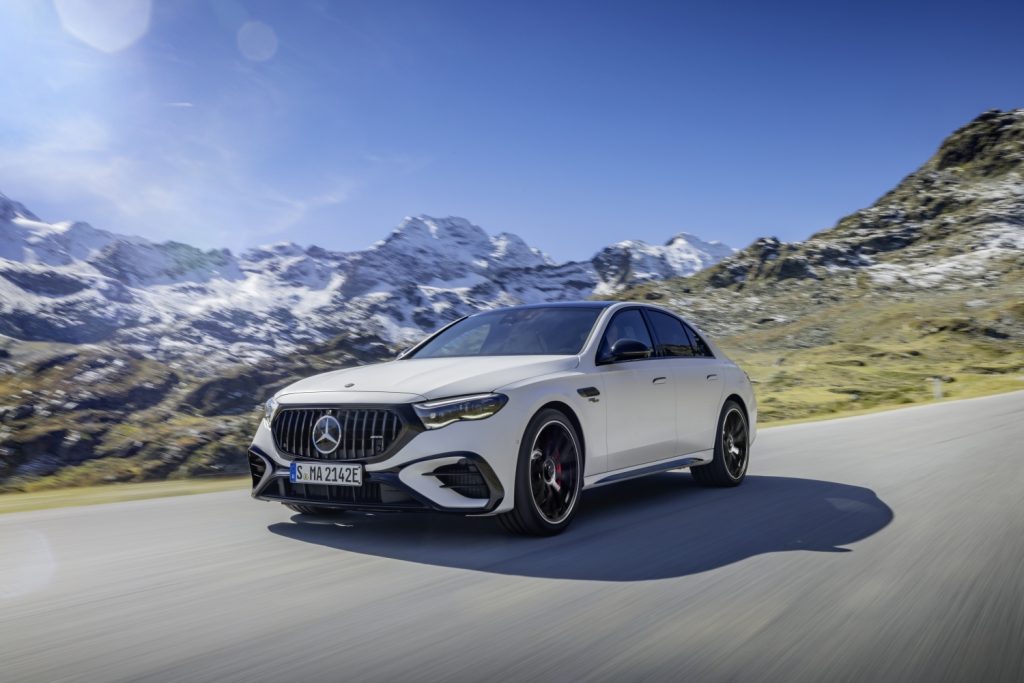
Mercedes-EQ: Technology Goes Electric
Mercedes-Benz didn’t just add a battery to a conventional automobile when it focused on electric vehicles. The sub-brand Mercedes-EQ has been created to create a family of battery-electric vehicles. The start of this family began with the show car Generation EQ in 2016. The EQ branding has been introduced as a marketing redistribution of the luxury car brand
By the early 2020s, Mercedes-EQ was a full range offering of the business and manufacturer of ten EQ modals to make up 15% of gross sales. In other words, the EQ branding complex is actually designated to create a normal additional subscription to create a family of battery electrical vehicles. One current flagship example of this is the EQS, a full-size luxury electric sedan.
Reviews of the 2026 EQS highlight some key technology points:
-
A large lithium-ion battery (around 118 kWh) offering an EPA-estimated range up to roughly 390 miles for certain variants.
-
Multiple powertrain options, from single-motor rear-wheel drive to dual-motor all-wheel drive, with outputs up to 516 horsepower.
-
Advanced driver-assistance features, including adaptive cruise control, 360-degree camera systems, and automated parking technology.
Mercedes-Benz positions its electric vehicles as “the future of mobility” with a focus on long range, fast charging, and seamless integration with digital systems like the MBUX Hyperscreen and EQ-specific navigation that plans routes around charging stops. In other words, the tech isn’t just under the hood; it’s everywhere you look and touch inside the cabin.
Inside The Cabin: MBUX, Hyperscreens, And Human-Focused Tech
Sit in a modern Mercedes and you’re surrounded by technology, but it rarely feels cold or clinical. That’s intentional. The company’s approach marries high-end hardware with genuinely thoughtful interface design.
Key elements include:
-
MBUX (Mercedes-Benz User Experience): An infotainment system that uses voice control, touch, and contextual information to simplify tasks. It can handle navigation, climate, calls, and more, and continues to evolve with over-the-air updates.
-
MBUX Hyperscreen: Available in models like the EQS, this massive curved glass panel stretches across much of the dashboard and combines multiple displays into one integrated surface.
-
Driver-assistance integration: Features like adaptive cruise, lane keeping, and parking assist are integrated into the display and controls in ways that aim to feel intuitive rather than overwhelming.
For instance, Drive Assist Pro links the ADAS functions of Mercedes with a navigation system powered by MB.OS and even a large language AI model. Using AI, the technology learns local traffic patterns, predicts ideal routes, and handles driving chores along the way, while keeping a clear feedback and control to the driver.
This is the place where specs become more than specs. If done well enough, it can turn a stressful commute into one that is calmer.
Pros And Cons Of Mercedes-Benz’s Tech-Heavy Approach
Even if you love technology, it’s worth considering the upsides and trade-offs of driving such a tech-focused brand.
Benefits of Mercedes-Benz technology for everyday drivers:
-
Exceptional safety foundation: Decades of innovation in ABS, ESP, and PRE-SAFE, plus ongoing work toward accident-free driving, give you layers of protection that work quietly in the background.
-
Comfort and refinement: From adaptive suspensions to noise insulation and advanced climate systems, the tech is tuned to make long drives feel easy.
-
Cutting-edge driver assistance: Systems like Drive Pilot (where available) and Drive Assist Pro reduce fatigue and can handle tedious traffic and complex city routes.
-
Future-ready electric lineup: Mercedes-EQ models provide real-world range, high-end interiors, and advanced charging and navigation capabilities.
Potential downsides to keep in mind:
-
Complexity: More technology means more systems to learn and, potentially, more that can require updates or repairs over time.
-
Cost: High-end tech comes at a price, both in the initial sticker and in possible long-term maintenance or subscription models for advanced features.
-
Feature saturation: Some drivers may feel overwhelmed by the sheer number of settings and options if they prefer a simpler, more analog driving experience.
For many owners, though, the benefits far outweigh those concerns, especially when safety and comfort are top priorities.
How To Make The Most Of Mercedes-Benz Technology As An Owner
Owning a Mercedes-Benz with all this technology doesn’t automatically mean you’re using it well. A few simple habits can help you get far more value from what’s already built into the car.
Practical steps to take:
-
Spend time with the manual and tutorials: It’s not glamorous, but you’ll uncover features you might otherwise ignore, from advanced navigation tricks to configurable driver profiles.
-
Learn your driver-assistance limits: Understand exactly when systems like adaptive cruise, lane keeping, and Drive Assist Pro can and can’t be used safely. They’re helpers, not replacements for your attention.
-
Keep software updated: Make sure you accept or schedule over-the-air updates so your car’s systems stay current and secure.
-
Match tires and maintenance to the tech: Follow Mercedes recommendations for tire types and pressures, and keep up with regular service so safety systems can perform as designed.
You’ll be surprised how many “wow” moments appear once you start intentionally exploring what the car can really do, instead of just using it like any other vehicle.
Should You Buy A Mercedes-Benz For Its Technology?
If you’re a small business owner, family driver, or enthusiast trying to decide whether to put Mercedes-Benz at the top of your shortlist, it helps to think in terms of what you value day to day.
Consider a Mercedes if you:
-
Place a high premium on safety and want a brand with a proven history of leading in that area.
-
Care about how technology is integrated, not just whether it exists. You want systems that feel intuitive and genuinely helpful.
-
Are interested in a long-term relationship with your car, where updates, electric options, and evolving features matter.
You might look elsewhere if you:
-
Prefer a very simple, analog driving experience with minimal electronics.
-
Don’t want to pay for advanced driver assistance or infotainment features you’ll never use.
-
Have a limited budget and prioritize basic transportation over premium features.
For many buyers, though, the vision of “perfection in technology” isn’t about bragging rights. It’s about stepping into the car after a long day, closing the door, and feeling like the machine around you is quietly working in your best interest.
Conclusion: Technology As A Quiet Kind Of Luxury
Mercedes-Benz technology is not boisterous. Whether it’s steering the car with sensitivity in sudden gusts of wind, tightening a belt when another driver cuts you off, or making you feel better in gridlock with near-virtual support.
From the first crumple zones and ABS in the 1970s to EQ electric models and artificial intelligence-driven Drive Assist Pro, the brand’s past is one long chain of “firsts” which became an expectation later.
If you love cars that tug at your heartstrings, yet are extremely interesting from an engineering perspective, here’s your chance. Mercedes-Benz is still around.
Try out a model that suits your lifestyle next, spending real time testing out its technology and checking to see if that quiet sense of confidence and polish feels like the desirable kind of perfection you’d like to live with daily.
